
 English
 RSS
RSS
1. Principles of applying e-invoices created from cash registers
Clause 1, Article 8, Circular No. 78/2021/TT-BTC prescribes that e-invoices with tax offices’ codes created from cash registers electronically connected to tax offices must adhere to the principles specified in Article 11 of Decree No. 123/2020/ND-CP, in particulars:
- It must be recognized as an invoice printed out from a POS cash register with a network connection for transmission of electronic data to the tax agency;
- Digital signature on that invoice is not required;
- The amount of money paid for goods or services shown on the invoice (or a copy of the invoice or the information search result on the invoice in the Portal of the General Department of Taxation) which is created by a POS cash register may be regarded as an expense that is supported by a legal invoice or document upon determination of tax obligations.
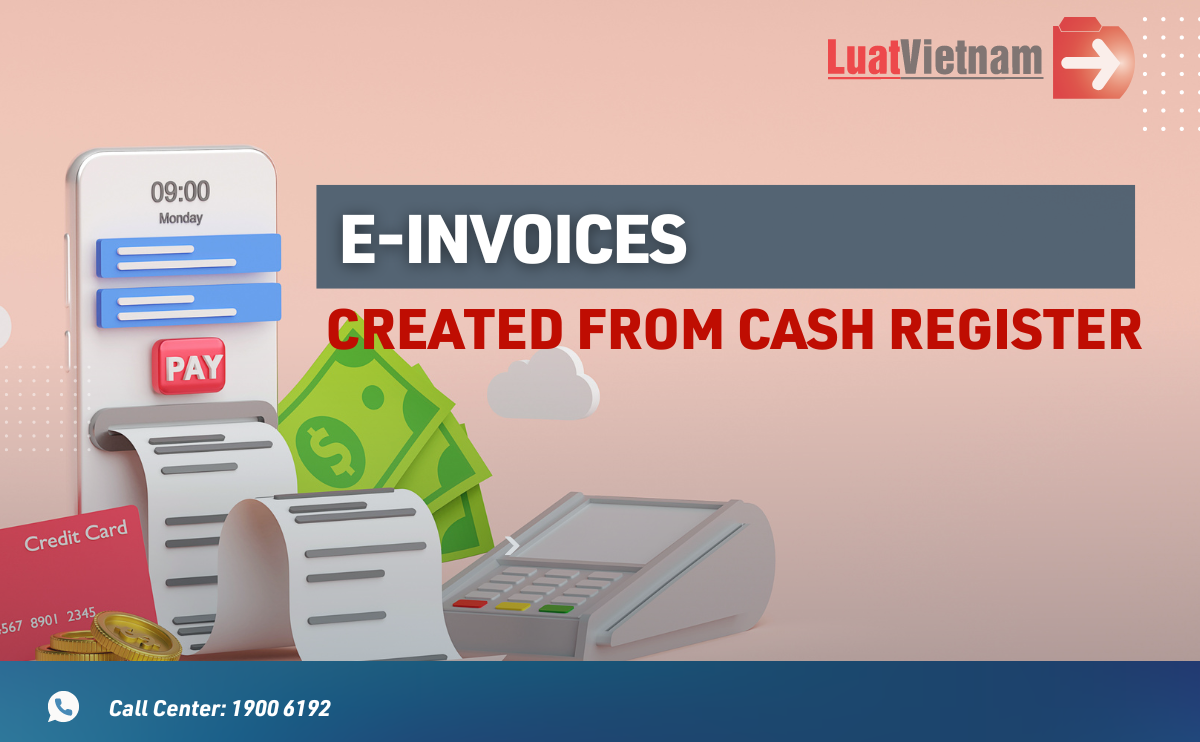
2. Objectives of applying e-invoices created from cash registers
In accordance with Clause 2, Article 8, Circular No. 78/2021/TT-BTC, the objectives include enterprises, business households and business individuals that pay taxes by the declaration method and provide goods and services directly to consumers (after the model of trader centers, department stores, consumer goods retail, catering services, restaurant, hotel, pharmacies, entertainment and recreation services, and other services).
Note: Above objectives may choose to use e-invoices created from cash registers electronically connected to tax offices or e-invoices with tax offices’ codes or e-invoices without codes.
3. Contents of e-invoices created from cash registers
Pursuant to Clause 3, Article 8, Circular No. 78/2022/TT-BTC, e-invoices with tax offices’ codes created from cash registers electronically connected to tax offices must have the following contents:
- Name, address and tax identification number of the seller; The invoice shall show the name, address and tax identification number of the seller in accordance with the name, address and tax identification number stated in the enterprise registration certificate, branch operation registration certificate, business household registration certificate, tax registration certificate, tax identification number notice, investment registration certificate, and cooperative registration certificate.
- Information on the buyer if so requested by the buyer (personal identification number or tax identification number);
Names of goods and services; unit price, quantity, and payment price.
In case of paying taxes by the deduction method, it is required to clearly write the selling price exclusive of value-added tax, value-added tax rate, value-added tax amount, and total payable amount inclusive of value-added tax;
- Time of invoice issuance;
- Tax agency’s code (consists of a transactional number which is a sole numerical series created by the tax agency's system and a chain of characters which is encoded by the tax agency based on the information provided by the seller on the invoice).
Tax offices’ codes shall be issued automatically in a range of characters for every business establishment when such establishments register for use of e-invoices with tax offices’ codes created from cash registers.
Therefore, e-invoices with tax offices’ codes created from cash registers have the simple contents, it is very useful in using because anybody can import information to export invoices as prescribed by laws.
4. Responsibilities of sellers
Pursuant to Clause 6, Article 8, Circular No. 78/2022/TT-BTC, Responsibilities of sellers when using e-invoices with tax offices’ codes created from cash registers electronically connected to tax offices:
- To register for use of e-invoices with tax offices’ codes created from cash registers electronically connected to tax offices under Article 15 of Decree No. 123/2020/ND-CP;
- To issue e-invoices with tax offices’ codes created from cash registers under Article 11 of Decree No. 123/2020/ND-CP and this Article;
- To use a range of character codes of tax offices when issuing e-invoices with tax offices’ codes created from cash registers electronically connected to tax offices in order to ensure continuity and uniqueness;
- To transmit data on e-invoices with tax offices’ codes already created from cash registers to tax offices right on a day via e-data receipt, transmission and storage service providers.
Here are the important regulations on e-invoices with tax offices’ codes created from cash registers.