English
 RSS
The Ministry of Finance has unveiled a draft decree to replace Decree 35 of 2022 on the management of industrial parks and economic zones, aiming to update investment incentives to catch up with sustainable development and green transition goals, as well as hi-tech requirements.
Compared to Decree 35, the draft decree reduces the number of incentives from six to four core groups, including:
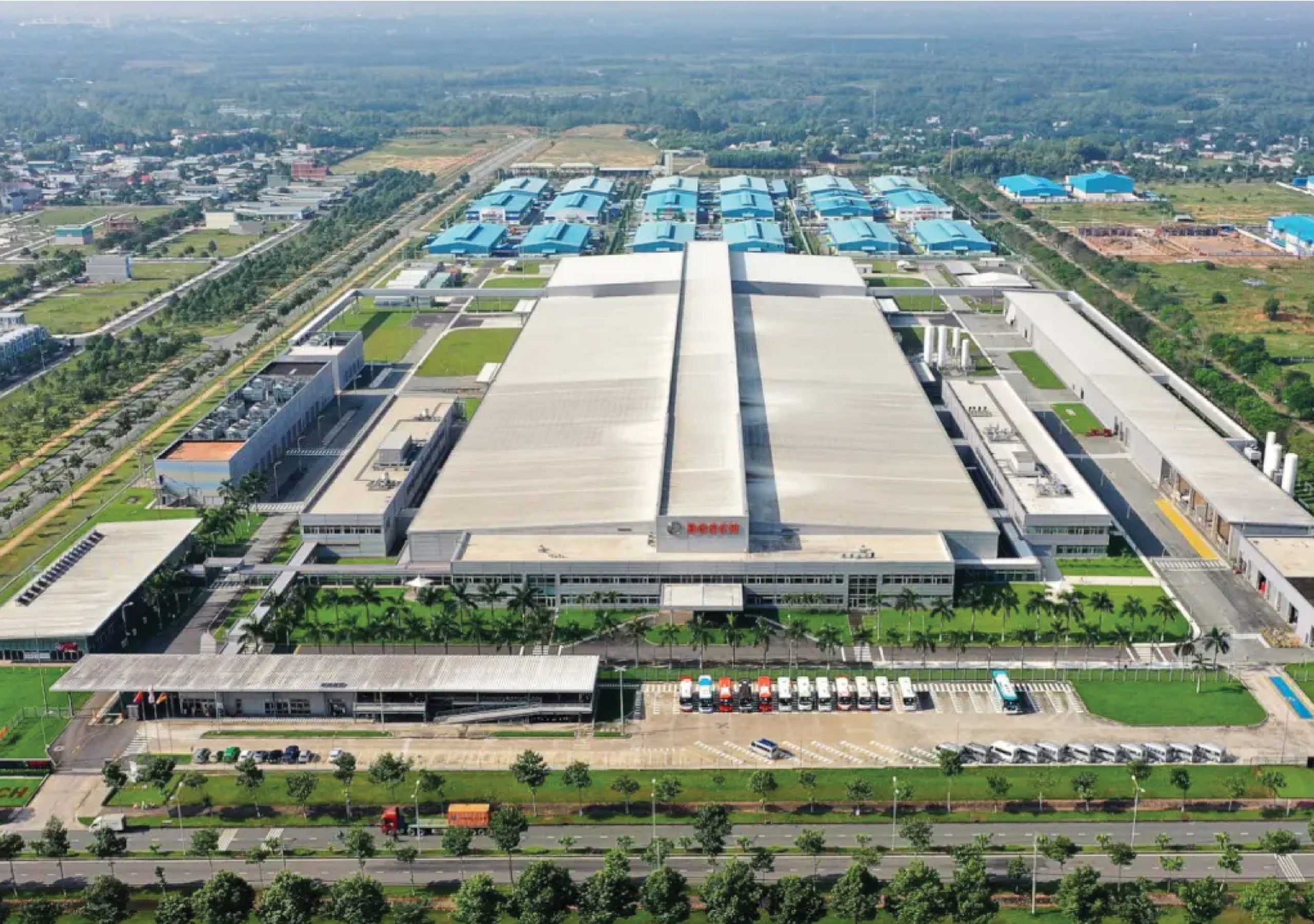
Investment incentive-eligible locations. Industrial parks and economic zones would continue to enjoy investment incentives provided by the Law on Investment, with preferential policies taking effect as soon as such industrial parks and economic zones are officially established.
Incentives for infrastructure projects. Infrastructure development projects and investment projects within industrial parks and economic zones would be eligible for incentives at levels specified in the tax, land, credit and accounting laws.
Worker-related investment incentives. Expenses for building, operation, or lease-purchase of worker accommodations, service facilities, and public utilities, along with investment expenses for facilities serving industrial symbiosis, greenhouse-gas emission reduction and environmental pollution control would be deductible when calculating taxable income under the Law on Corporate Income Tax.
One-stop administrative procedure support. The draft maintains the “on-site, single-window” mechanism, under which competent state agencies would assist investors with simplified procedures for investment, business registration, land registration, construction, environmental protection, labor and trade.
Noteworthily, the draft places greater emphasis on incentives for industrial parks and economic zoned engaged in greenhouse gas reduction, resource reuse, and industrial symbiosis. Enterprises investing in clean technology, renewable energy, or circular-economy model would be entitled to additional tax and credit incentives.
According to the Ministry of Finance, the draft featuring with simplified incentive groups but a broader scope and new green-investment criteria would make incentive policies more effective in practice. The approach is expected to open up greater space for regional economic development, attract high-quality capital, and accelerate the country’s green transition and sustainable growth. It is also viewed as an important step in institutional reform, supporting the country’s pursuit of a green and circular economy and its commitment to achieving net-zero emissions by 2050.
- (VLLF)