 English
 RSS
RSS
By 2060, Ho Chi Minh City will establish itself as a global, civilized, modern, and compassionate city, with a development level comparable to that of major cities worldwide. Such is a part of Decision 1125/QD-TTg dated June 11, approving a project on adjustments to the Ho Chi Minh City Master Plan until 2040, with a vision to 2060.
Under the Decision, the southern metropolis will become an economic, financial, and service hub of Asia, a growth powerhouse, and a development driver for the South and for Vietnam as a whole. It is expected to have high living standards and quality of life, along with a well-developed economy and culture, while serving as a destination for international financial institutions and corporations.

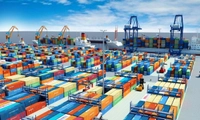
In terms of its characteristics, it is defined as a special centrally-run city and a nationally important center of economy, culture, education–training, and science–technology, with a pioneering role in promoting innovation and creativity nationwide. It is also envisioned to become a hub for tourism, finance–trade, and logistics services in Southeast Asia and the Asia-Pacific region, as well as for healthcare services in the ASEAN region.
The local population is forecast to reach 11–13.7 million by 2030, and 14–16.5 million by 2040.
The city’s spatial structure is divided into six regions linked with the organization of the local public transport system. These include the central urban area and its surrounding areas, along with the eastern, western, northern, southern, and southeastern regions.
Regarding housing development, the master plan targets that by 2030, the average housing floor area per capita will reach approximately 27–30 square meters, increasing to 30–32 square meters by 2040. The expansion of housing will be closely aligned with the urban development process.
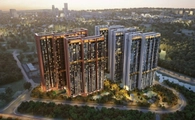
Ho Chi Minh City is set to prioritize the construction of apartment blocks, which will make up a significant proportion of new housing developments.
The plan also includes the establishment of dedicated zones for social housing, accommodation for workers, and purpose-built residences for students. At the same time, the city will form training institutions, industrial parks, and export processing zones across its development regions.
Ho Chi Minh City will place particular emphasis on expanding its stock of affordable and rental housing, while investing in student housing and establishing a fund for social housing for the disadvantaged and contributors to the revolution.
By VLLF