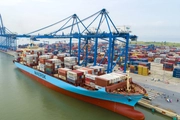
Draft Railway Law paves the way for greater private sector involvement

The draft Railway Law proposes a comprehensive legal framework to attract investment capital from the private sector in modernizing the national railway system.

The Government is charting a new course for the country’s railway sector through a draft revised Railway Law that is scheduled to be discussed by National Assembly deputies on June 23.

Comprising 80 articles arranged in eight chapters, the draft aims to overhaul existing regulations, with a strong emphasis on encouraging private sector participation in railway infrastructure projects via Build-Transfer (BT) and Build-Operate-Transfer (BOT) models.

According to Minister of Construction Tran Hong Minh, the draft reflects the State’s strategic priority of making railways a core component of the national transport system. To this end, the State will increase funding to build, upgrade, maintain and protect railway infrastructure while also investing in the railway industry.

The draft law mandates the prioritization of budget allocations for the development of railway infrastructure and the training of human resources in accordance with approved master plans and plans. It also calls for the reservation of land for construction of railway infrastructure and related facilities. Meanwhile, local resources are to be mobilized to the fullest extent to facilitate land compensation, provide resettlement assistance, and construct specific components of the national railway infrastructure in localities through which railway lines pass.

Draft Railway Law paves the way for greater private sector involvement

To make railway projects more attractive to investors from non-state sectors, the draft law proposes a range of financial incentives. Organizations involved in railway business activities will be eligible for exemption from, and reduction of, land use levy and land rental, and the State’s support for the development of national and local railway infrastructure. Entities investing in railway infrastructure construction will also have their entire expenses for land clearance, operational preparation, and technology transfer and training covered by the State.

Beyond investment incentives, the draft law introduces provisions to promote R&D activities in the railway sector. Organizations and individuals engaged in scientific and technological tasks for the development of the railway industry will be allowed to apply the methods of restricted bidding, contractor designation and order placement to select contractors for provision of services and goods. During the implementation period, they will receive incentives similar to those offered to hi-tech enterprises under the law on high technology. In addition, they will be entitled to supports from the state budget for the procurement and operation of machinery and equipment required for R&D activities in the railway sector.

Minister Minh described these provisions as breakthrough solutions designed to address longstanding procedural bottlenecks in the investment process for urban railway systems at the local level, help to accelerate investment and facilitate the completion of urban railway networks in Hanoi and Ho Chi Minh City by 2035.

Workforce development is another central focus of the draft law. Foreign contractors involved in railway infrastructure projects will be required to transfer technology and provide training for Vietnamese personnel. This provision aims to enhance domestic capacity to manage and operate modern railway systems independently, thereby reducing future reliance on foreign technical expertise.- (VLLF)

1900 6192 để được giải đáp qua tổng đài
090 222 9061 để sử dụng dịch vụ Luật sư tư vấn (CÓ PHÍ)
Đánh giá bài viết:
Bài viết đã giải quyết được vấn đề của bạn chưa?
Rồi Chưa

Tin cùng chuyên mục

Vietnam Law Day promotes respect for legislation and culture of legal compliance

Vietnam Law Day promotes respect for legislation and culture of legal compliance

Vietnam Law Day promotes respect for legislation and culture of legal compliance

Observed annually on November 9, Vietnam Law Day seeks to promote respect for the constitution and the law, raise public awareness of legal compliance and encourage people to make respect for regulations an integral part of everyday life. This year’s activities place greater emphasis on practical, people-centred legal education and digital transformation.

Proposed programme strives for at least 50 per cent drug-free communes and wards nationwide by 2030

Proposed programme strives for at least 50 per cent drug-free communes and wards nationwide by 2030

Proposed programme strives for at least 50 per cent drug-free communes and wards nationwide by 2030

The Government has recently proposed a national target programme on drug and crime prevention and control for the 2026-35 period, that aims for at least 50 per cent of communes and wards nationwide to be drug-free by 2030, binding the responsibilities of grassroots Party Committees and local authorities.

Vietnam well-positioned to attract high-quality European investment: insiders

Vietnam well-positioned to attract high-quality European investment: insiders

Vietnam well-positioned to attract high-quality European investment: insiders

Vietnam has established a considerable manufacturing and export base, giving it an advantage in attracting investment from European corporations. However, amid the restructuring of global supply chains, the key objective is not merely to attract more investment, but also to enhance the quality of investment and the value it generates.