
 English
 RSS
RSS
Permanent Deputy Prime Minister Nguyen Hoa Binh recently chaired a meeting with leaders of relevant ministries and agencies to discuss the draft Government Decree on the establishment of the International Financial Center (IFC) in Vietnam. There are a total of eight decrees to be issued to guide the implementation of Resolution 222/2025/QH15, including:
- The Decree on the establishment of the IFC in Vietnam;
- The Decree on financial policies applicable within the IFC;
- The Decree on licensing and operation of banks, foreign exchange management, anti–money laundering, counter–terrorist financing, and prevention of proliferation financing of weapons of mass destruction within the IFC;
- The Decree on import–export policies, distribution of goods and services, trading platforms, and exchanges within the IFC;
- The Decree on labor, employment, and social welfare applicable within the IFC;
- The Decree on land, construction, and environmental policies applicable within the IFC;
- The Decree on the international arbitration center under the IFC and the application of law and dispute resolution mechanisms; and
- The Decree on residence and immigration policies within the IFC.
Among these, the draft Decree on the establishment of the IFC is being prepared under the leadership of the Ministry of Finance (MOF). Deputy Minister Nguyen Thi Bich Ngoc reported that the Ministry has collected written opinions from ministries, agencies, and the two host localities, Ho Chi Minh City and Da Nang, on the draft decree, sought appraisal from the Ministry of Justice (MOJ), and organized multiple meetings to refine the draft before submitting it to the Government.
Deputy Prime Minister Nguyen Hoa Binh requested the MOF to thoroughly incorporate opinions expressed at the meeting and to consult international experts in finalizing the IFC’s governance model. He emphasized the need for a carefully studied and internationally aligned structure that ensures modernity, transparency, and efficiency in management and supervision. The Deputy Prime Minister also provided specific guidance on the proposed organizational models, including the executive body, supervisory body, and dispute resolution mechanism, clarifying the functions and feasibility of each proposal.
Earlier, on October 3 in Hanoi, the MOJ held a seminar titled “Legal Framework for the International Financial Center in Vietnam” to seek opinions from financial and legal experts on the decrees related to the IFC.
Under Resolution 222/2025/QH15, two IFC facilities will be established—one in Ho Chi Minh City and one in Da Nang. The MOF has proposed a model with two executive bodies and two supervisory bodies, one for each city, to ensure local independence and flexibility while maintaining the Government’s unified strategic direction.
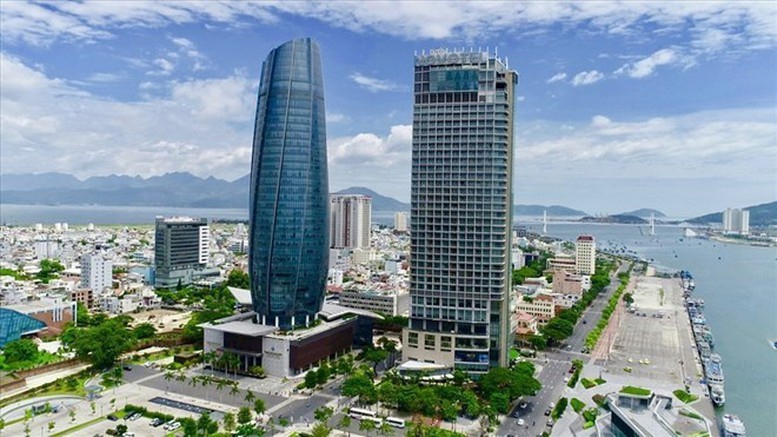
The MOF explained that establishing separate executive and supervisory bodies in both cities is necessary, given that financial operations take place continuously and require local responsiveness, while specialized supervision remains under central agencies. The Ministry proposed delegating full functions, duties, and powers to these local bodies under a strongly decentralized and devolved mechanism, supported by a shared information system and coordination framework to ensure consistency and avoid duplication or competition.
At the seminar, Dr. Nguyen Van Cuong, Director of the MOJ’s Institute of Legal Science and Strategy, described an IFC as a zone that concentrates global financial services such as banking, insurance, capital markets, fund management, digital assets, fintech, and international commercial arbitration. He noted that IFCs serve as “hubs” for capital flows, financial technologies, and high-quality human resources with global reach.
To build a high-quality legal foundation, Dr. Cuong suggested that the framework should be appropriately distinct from the national legal system, potentially incorporating features of a “common-law special jurisdiction” adapted to Vietnam’s civil law environment. He proposed establishing a one-stop governance authority, a trusted dispute resolution mechanism using English as a working language, and building a brand of legal credibility, as IFCs compete not only through tax incentives but also through the strength and reliability of their legal and institutional systems.
He further highlighted the need to address potential conflicts between IFC laws and domestic laws, avoid perceptions of “tax haven” practices, and design flexible visa policies and digital one-stop administrative procedures to attract international professionals in the fields of finance, technology, and law.
With strong Government leadership, close coordination among ministries and localities, and the participation of legal and economic experts, the process of finalizing the decrees on international financial centers is being accelerated to ensure both quality and coherence. These decrees will lay the groundwork for developing modern, competitive, and globally integrated financial centers, contributing to Vietnam’s institutional capacity and sustainable economic growth.
- (VLLF)