
 English
 RSS

Prime Minister Pham Minh Chinh has requested ministers, heads of ministerial-level and State agencies and chairpersons of provincial-level People’s Committees to implement measures to strengthen the training of high-quality human resources for the semiconductor, artificial intelligence (AI) and cloud computing.
In Telegram No. 83/CD-TTg dated 23/8/2024, the Premier assigned the Minister of Education and Training (MoET) to direct public and private tertiary education institutions to set up specialized professional units for training and researching in the target industries.
The ministry was tasked to guide the training establishments to review and renovate their training program while developing and implementing training plans for lecturers, researchers, students majoring in semiconductor microchips, AI and cloud computing, strengthening the application of AI in teaching and studying, and promote cooperation with enterprises, universities and research institutes at home and abroad in training, research and development activities in these fields.
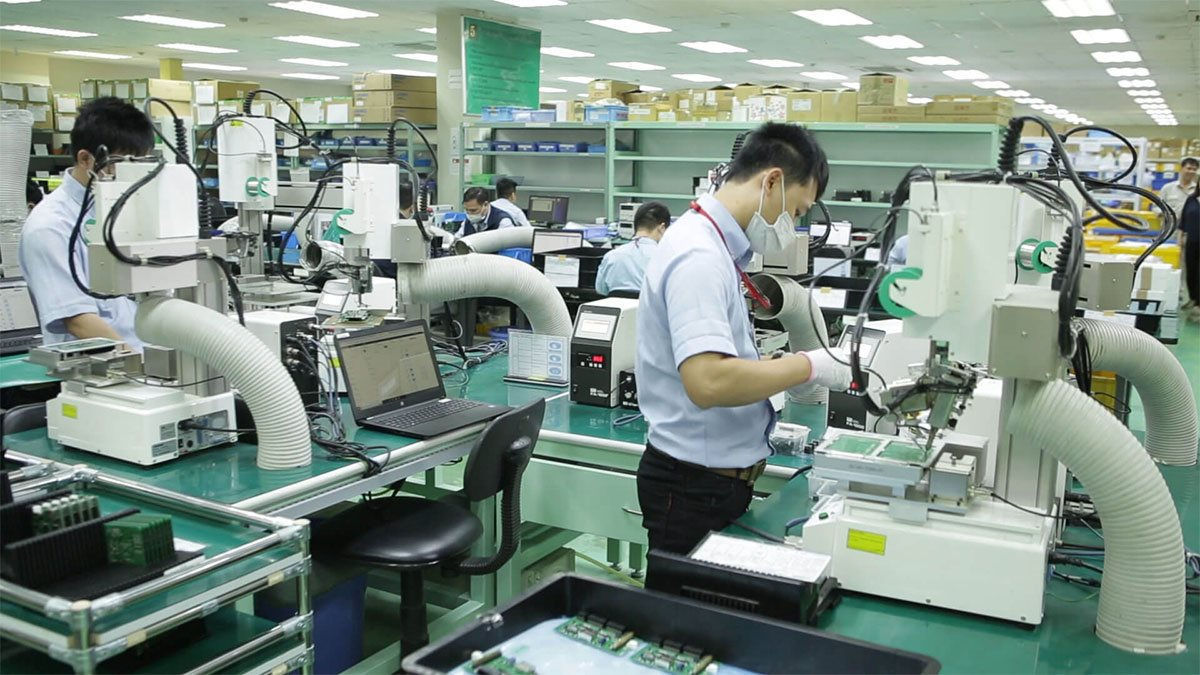
The Governmental leader also asked the MoET to promptly formulate and submit a scheme to develop high-quality human resources for hi-tech sectors and basic industries and a directive on promoting human resources training for semiconductor microchips manufacturing, AI and cloud computing.
He also requested the Minister of Planning and Investment to submit a scheme to develop human resources for the semiconductor industry until 2030 with a vision to 2050.
The Minister of Science and Technology was tasked to prioritize scientific research programs on semiconductor microchips manufacturing, AI and cloud computing in association with training talents, experts and scientists in universities, while working with related ministries and sectors to complete mechanisms and policies to attract talents from other countries and industrial sectors to work and teach in universities in the fields.
The PM ordered the Minister of Information and Communications to submit a development strategy for Vietnam’s semiconductor industry until 2030 with a vision to 2050, and develop a plan to carry out the strategy which prioritizes the development of big data computing centers to support higher education institutions in training high-quality human resources in the target fields.