10-year scheme for training high-quality human resources abroad approved

The Prime Minister on December 10 issued a decision approving a scheme to send Vietnamese citizens to study in Russia, China, Eastern European countries, and former Soviet Union countries during 2026-35.

The Prime Minister on December 10 issued a decision approving a scheme to send Vietnamese citizens to study in Russia, China, Eastern European countries, and former Soviet Union countries during 2026-35.

Under Decision 2672/QD-TTg, the program aims to develop high-quality human resources through undergraduate, master’s, doctoral and short-term training courses in these countries, with priority given to disciplines in which these countries have strong expertise.
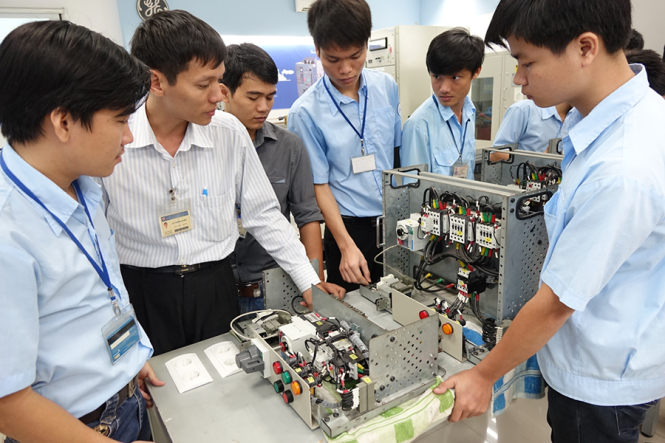
During the next ten years, Vietnam plans to send around 1,500 candidates abroad each year under both agreement-based and non-agreement scholarship programs. About 1,000 will study in Russia annually, while the remaining 500 will go to China, Eastern European countries and former Soviet Union nations. The final numbers may vary depending on foreign scholarship quotas, actual training demand, and the state budget’s capacity.

10-year scheme for training high-quality human resources

The scheme covers all fields in which Vietnam has training demands, with priority given to defense and security, high technology, artificial intelligence, cloud computing, quantum technology, blockchain, energy technologies, advanced materials, rare-earth technologies, ocean and geoscience studies, aviation and space, semiconductors, nuclear and energy, railways, biotechnology, medicine and pharmacy, law, and other priority areas defined in approved national programs and projects.

The overseas admission and selection under this scheme will be implemented from 2026 to 2035. The training will be conducted full-time at reputable institutions in these countries.

The decision specifies that funding for the scheme will come from support from partner countries for Vietnamese citizens under both agreement-based and non-agreement scholarships; the Vietnamese state budget, covering training and project management costs in line with the law; and socialized funding, including contributions from universities, sponsorship from domestic and international enterprises, organizations, and individuals, as well as other legally mobilized resources.

The management and use of funds for the scheme will comply with state budget regulations and other relevant legal provisions.

This decision takes effect from the signing date.

- (VNA/VLLF)

1900 6192 để được giải đáp qua tổng đài
090 222 9061 để sử dụng dịch vụ Luật sư tư vấn (CÓ PHÍ)
Đánh giá bài viết:
Bài viết đã giải quyết được vấn đề của bạn chưa?
Rồi Chưa

Tin cùng chuyên mục

Proposed programme strives for at least 50 per cent drug-free communes and wards nationwide by 2030

Proposed programme strives for at least 50 per cent drug-free communes and wards nationwide by 2030

Proposed programme strives for at least 50 per cent drug-free communes and wards nationwide by 2030

The Government has recently proposed a national target programme on drug and crime prevention and control for the 2026-35 period, that aims for at least 50 per cent of communes and wards nationwide to be drug-free by 2030, binding the responsibilities of grassroots Party Committees and local authorities.

Vietnam well-positioned to attract high-quality European investment: insiders

Vietnam well-positioned to attract high-quality European investment: insiders

Vietnam well-positioned to attract high-quality European investment: insiders

Vietnam has established a considerable manufacturing and export base, giving it an advantage in attracting investment from European corporations. However, amid the restructuring of global supply chains, the key objective is not merely to attract more investment, but also to enhance the quality of investment and the value it generates.