New rule to simplify business conditions for vehicle inspection centers

From January 1 this year, vehicle inspection centers can be established at bus stations and rest stops, according to Government Decree 166/2024/ND-CP dated December 26, on business conditions for the operation and establishment of vehicle inspection centers.

This decree simplifies business requirements while addressing industry challenges, ensuring transparency and promoting convenience. It builds upon previous regulations and introduces updates in alignment with the Law on Road Traffic Safety Law.
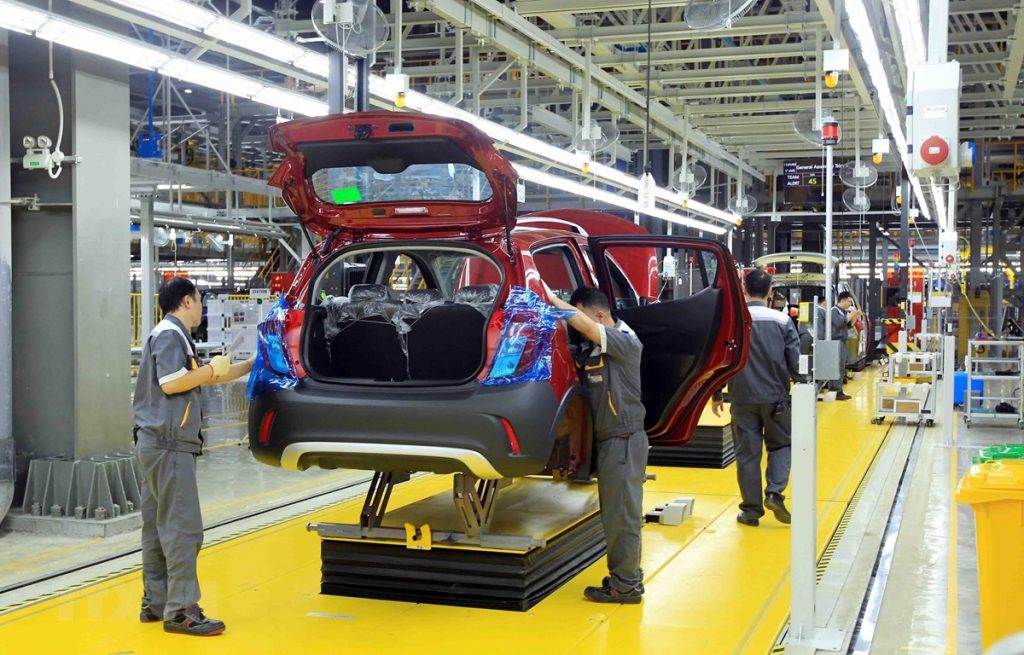
Accordingly, the new regulation allows inspection centers to share premises with bus stations or rest stops without adhering to stringent space requirements. However, these centers must comply with national technical standards for infrastructure and equipment.

Business conditions for vehicle inspection centers

It also expands entry-level qualifications for inspectors to include bachelor's or engineering degrees in relevant technical fields.

Inspectors are now classified into three tiers, namely Level I, II, and III, each with distinct responsibilities. Notably, the promotion period from Level II to Level I has been extended to five years from the previous three.

Leadership standards for inspection centers have also been revised. Leaders must now hold at least a Level II inspector certification, broadening eligibility criteria compared to earlier requirements.

The decree also introduces operational flexibility, requiring only a minimum number of inspectors for a center to function rather than specifying a fixed ratio of inspectors to inspection lines.

Additionally, the authority to issue vehicle inspection certificates is extended to department heads of inspection centers, not just Centre leaders as previously regulated.

New standards for motorcycle and motorbike emissions testing facilities are also introduced, designed to align with the Investment Law and the Law on Road Traffic Safety.

For fixed emissions testing centers, a minimum area of 15 sq.m per testing device is required, and these centers can share space with repair shops. Mobile testing facilities are exempt from space requirements, provided the necessary equipment is permanently installed on a specialized vehicle.

Regarding personnel, emissions testing centers must employ at least one certified inspector and a skilled technician. Staff may take on multiple roles if they hold the appropriate professional certifications.

In a significant shift, provincial Departments of Transport will assume full responsibility for evaluating and certifying vehicle inspection centers. Previously, this task required collaboration with the Registry Department, which will now play a supporting role only when requested.

By: VNA/VLLF

1900 6192 để được giải đáp qua tổng đài
090 222 9061 để sử dụng dịch vụ Luật sư tư vấn (CÓ PHÍ)
Đánh giá bài viết:

Tin cùng chuyên mục

List of special-purpose machinery serving agricultural production to 5% VAT from December 31, 2025

List of special-purpose machinery serving agricultural production to 5% VAT from December 31, 2025

List of special-purpose machinery serving agricultural production to 5% VAT from December 31, 2025

The Minister of Agriculture and Environment has promulgated Circular No. 101/2025/TT-BNNMT on providing guidance on other special-purpose machinery serving agricultural production not yet specified in Clause 6, Article 19 of the Government’s Decree No. 181/2025/ND-CP dated July 01, 2025, detailing a number of articles of the Law on Value-Added Tax.

English translation of the 2025 Law on Tax Administration is newly published

English translation of the 2025 Law on Tax Administration is newly published

English translation of the 2025 Law on Tax Administration is newly published

The Law on Tax Administration No. 108/2025/QH15 was passed to promote digital transformation, simplify administrative procedures, and enhance transparency in Vietnam's tax administration. The Law shall take effect from July 01, 2026 (specifically, several regulations on business households shall take effect earlier from January 01, 2026).

Law on Science, Technology and Innovation helps drive fast, sustainable development

Law on Science, Technology and Innovation helps drive fast, sustainable development

Law on Science, Technology and Innovation helps drive fast, sustainable development

As the global economy transitions towards a knowledge-based model, science, technology and innovation have become decisive engines of national growth. In Vietnam, the 2025 Law on Science, Technology and Innovation is widely viewed as a strategic institutional framework for improving national competitiveness while raising the country’s position in global value chains.