Nation loosens regulation on foreign workers’ employment

The Government has recently revised Decree 152 of 2020, guiding the recruitment and management of foreign workers in Vietnam, in an attempt to create favorable conditions for foreigners working in the country.

The Government has recently revised Decree 152 of 2020, guiding the recruitment and management of foreign workers in Vietnam, in an attempt to create favorable conditions for foreigners working in the country.

Under Decree 70 dated September 18, every foreign expert has to possess a university or higher degree or an equivalent qualification diploma, and have at least three years’ work experience for his/her intended working position in Vietnam.

Foreign workers’ employment
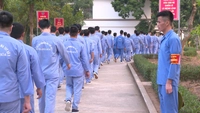
Nation loosens regulation on foreign workers’ employment (Illustration)

Compared to Decree 152, the new regulation no longer requires foreign experts’ university degrees to be relevant to the working positions for which they will be employed.

Besides, foreign technical workers are required to undergo training for at least one year and have at least three years’ working experience relevant to their expected job assignments in Vietnam.

Notably, at least 15 days before the expected date of a foreign worker’s work commencement, his/her employer (other than the contractor) will have to submit a report on a change in the demand for employment of foreigners regarding the working position, form of job performance and workplace to the Ministry of Labor, Invalids and Social Affairs (MOLISA) or provincial-level Department of Labor, Invalids and Social Affairs.

In case a foreign worker works for an employer in Vietnam in different locations, such locations must all be listed in the application for a work permit.

As assigned under the Decree, MOLISA will be in charge of the unified state management of recruitment and management of foreign workers in Vietnam, and delegate powers to provincial-level Departments of Labor, Invalids and Social Affairs for management of foreign workers in their localities.

By: (VNA/VLLF)

1900 6192 để được giải đáp qua tổng đài
090 222 9061 để sử dụng dịch vụ Luật sư tư vấn (CÓ PHÍ)
Đánh giá bài viết:
(1 đánh giá)
Bài viết đã giải quyết được vấn đề của bạn chưa?
Rồi Chưa

Tin cùng chuyên mục

Vietnam Law Day promotes respect for legislation and culture of legal compliance

Vietnam Law Day promotes respect for legislation and culture of legal compliance

Vietnam Law Day promotes respect for legislation and culture of legal compliance

Observed annually on November 9, Vietnam Law Day seeks to promote respect for the constitution and the law, raise public awareness of legal compliance and encourage people to make respect for regulations an integral part of everyday life. This year’s activities place greater emphasis on practical, people-centred legal education and digital transformation.

Proposed programme strives for at least 50 per cent drug-free communes and wards nationwide by 2030

Proposed programme strives for at least 50 per cent drug-free communes and wards nationwide by 2030

Proposed programme strives for at least 50 per cent drug-free communes and wards nationwide by 2030

The Government has recently proposed a national target programme on drug and crime prevention and control for the 2026-35 period, that aims for at least 50 per cent of communes and wards nationwide to be drug-free by 2030, binding the responsibilities of grassroots Party Committees and local authorities.

Vietnam well-positioned to attract high-quality European investment: insiders

Vietnam well-positioned to attract high-quality European investment: insiders

Vietnam well-positioned to attract high-quality European investment: insiders

Vietnam has established a considerable manufacturing and export base, giving it an advantage in attracting investment from European corporations. However, amid the restructuring of global supply chains, the key objective is not merely to attract more investment, but also to enhance the quality of investment and the value it generates.