New law aims at facilitating geological and mineral management

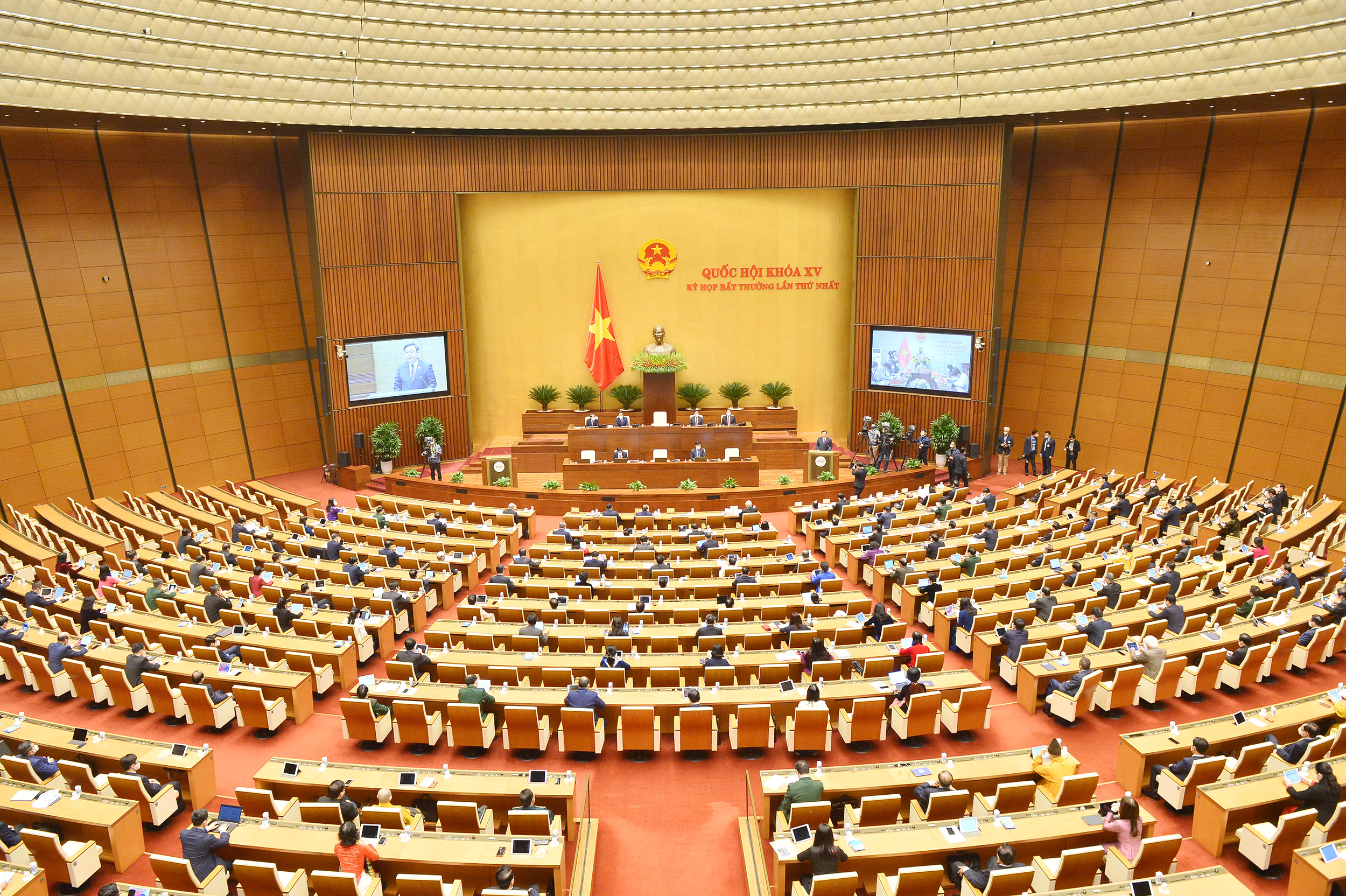
The Geology and Mineral Law, which was passed on November 29, 2024, and will come into force on July 1 this year, is expected to help create a consistent and unified legal framework for the management and exploitation of geological resources and minerals.

With 111 articles arranged in 12 chapters, the Law provides for basic geological surveys; geo-mining investigations; protection of unexploited mineral resources; mineral exploitation; mineral recovery; and finance in the geology and mineral sector.

It also specifies state management within the scope of Vietnam’s mainland, offshore islands, internal waters, territorial waters, contiguous zones, and exclusive economic zone and continental shelf.

The Law strictly prohibits the trading of minerals of illegal origin and deployment of mining activities without approval and permission from competent state management agencies. Acts of taking advantage of geological and mineral investigation to infringe upon the interests of the State or cause harms to organizations, individuals or the community, or intentionally destroying valuable geological and mineral specimens are also forbidden.
Worthy of note, the Law classifies minerals into four groups so as to develop appropriate approach from the stage of planning, licensing and supervising mineral exploration and mining activities to mine closure. The maximum mineral exploitation period under an investment project is 30 years and such period may be extended in some necessary cases but must not exceed 50 years.

New law aims at facilitating geological and mineral management

Compared with the 2010 Mineral Law, this Law specifies cases where it is permitted to exploit minerals without requiring the formulation of mineral master plans such as exploitation of minerals, scattered, recovery and enhanced recovery of minerals, and cases where mining licenses will be granted not based on geological and mineral management plans.

The Law states that the State will organize the closure of mines in case the owners of mining projects go bankrupt or are unable to close mines themselves.

It also adopts policies to promote the use of environment-friendly technologies, equipment and materials as well as the application of circular economy models in mining and processing activities.

By: VLLF

1900 6192 để được giải đáp qua tổng đài
090 222 9061 để sử dụng dịch vụ Luật sư tư vấn (CÓ PHÍ)
Đánh giá bài viết:
Bài viết đã giải quyết được vấn đề của bạn chưa?
Rồi Chưa

Tin cùng chuyên mục

Vietnam Law Day promotes respect for legislation and culture of legal compliance

Vietnam Law Day promotes respect for legislation and culture of legal compliance

Vietnam Law Day promotes respect for legislation and culture of legal compliance

Observed annually on November 9, Vietnam Law Day seeks to promote respect for the constitution and the law, raise public awareness of legal compliance and encourage people to make respect for regulations an integral part of everyday life. This year’s activities place greater emphasis on practical, people-centred legal education and digital transformation.

Proposed programme strives for at least 50 per cent drug-free communes and wards nationwide by 2030

Proposed programme strives for at least 50 per cent drug-free communes and wards nationwide by 2030

Proposed programme strives for at least 50 per cent drug-free communes and wards nationwide by 2030

The Government has recently proposed a national target programme on drug and crime prevention and control for the 2026-35 period, that aims for at least 50 per cent of communes and wards nationwide to be drug-free by 2030, binding the responsibilities of grassroots Party Committees and local authorities.

Vietnam well-positioned to attract high-quality European investment: insiders

Vietnam well-positioned to attract high-quality European investment: insiders

Vietnam well-positioned to attract high-quality European investment: insiders

Vietnam has established a considerable manufacturing and export base, giving it an advantage in attracting investment from European corporations. However, amid the restructuring of global supply chains, the key objective is not merely to attract more investment, but also to enhance the quality of investment and the value it generates.