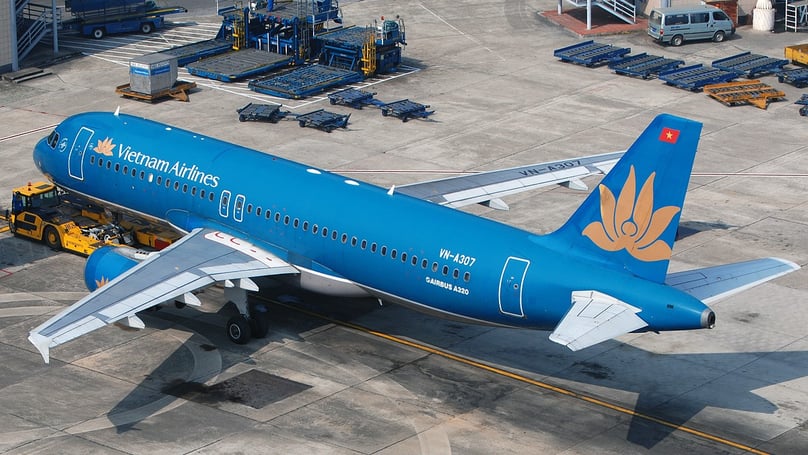
Vietnam's aviation industry is entering a phase of remarkable growth, evidenced by increasing transportation demand, infrastructure expansion, and growing participation from both domestic and international investors. In this context, identifying and fully complying with legal regulations on investment and business operations in the aviation sector is not only a prerequisite for the legality of any project but also a foundation for safeguarding investors’ legal interests and promoting sustainable, transparent, and stable development of Vietnam's aviation market.
To better understand the aviation sector’s potential, you may refer to related articles such as Airport Operation: A Highlight for Foreign Investment Attraction and A Promising Sector for FDI.
1 Legal Framework Governing Investment and Business in Aviation
1.1. Civil Aviation Law
The Law on Civil Aviation of Vietnam (as amended in 2023) serves as the primary legislation governing civil aviation activities. This law sets forth principles for state management, safety standards, air transport operations, and, specifically, regulations on investment and business activities in the aviation sector.
Legal basis: The Law on Civil Aviation of Vietnam 2006 (amended in 2023), effective as of January 1, 2024.
1.2. Investment Law and Related Legal Instruments
Investment activities in the aviation sector are also governed by the Investment Law 2020, under which aviation is classified as a conditional business line (Annex IV). Accordingly, investors must meet stringent legal, technical, and financial requirements to obtain licenses.
In addition, guiding regulations such as Decree No. 89/2019/ND-CP (as amended in 2023) detail conditions regarding foreign capital ownership, minimum charter capital, licensing
2. Investment and Business Conditions in the Aviation Sector
2.1. Minimum Capital Requirements
Investors intending to establish an airline in Vietnam must meet strict capital conditions:
Minimum charter capital: Depending on the fleet size, the enterprise must have charter capital ranging from VND 300 billion to VND 700 billion (Article 1.5, Decree 89/2019/ND-CP).
Equity ownership ratio: The enterprise must maintain a minimum equity capital of VND 100 billion to ensure solvency and operational stability (Article 1.5, Decree 89/2019/ND-CP).
Reserve fund requirements: Although no specific regulation on “reserve funds” exists, financial capacity and minimum capital requirements are clearly defined to ensure safe and sustainable operation. According to Article 30.4 of Decree 96/2016, audited financial reports must be submitted annually to the Civil Aviation Authority of Vietnam for inspection and supervision.
2.2. Human Resource Requirements
Under Vietnamese law, qualified human resources are a critical requirement for licensing and maintaining operations of civil aviation enterprises. Staffing standards demonstrate operational capability and, more importantly, guarantee flight safety — the top priority in aviation.
Executive and management personnel: Pursuant to Article 1.4 of Decree 89/2019/ND-CP, personnel in charge of safety management, security, flight operations, aircraft maintenance, and flight training must possess at least three years of continuous experience in the appointed field, along with recognized degrees or certificates under civil aviation regulations.
Pilots, engineers, and technicians: Annex 1 of the Chicago Convention stipulates licensing standards for aviation personnel, including pilots, engineers, and technicians. These standards encompass professional qualifications, practical experience, and medical assessments to ensure competency and safety.
Cabin crew and ground staff: Must be trained and certified by approved institutions in accordance with Circulars 10/2018 and 35/2021 on aviation personnel training and assessment.
3. Licensing Process for Air Transport Business
3.1. Application Dossier
To obtain an Air Transport Business License under Article 1.7 of Decree 89/2019, the following documents must be submitted:
Application letter for the license
Business plan (with supporting documents) demonstrating compliance with air transport business conditions;
Original capital confirmation document;
Certified copies or notarized copies of enterprise documentation;
Contract or agreement for aircraft purchase, lease, or lease-purchase;
Enterprise charter;
List of members and shareholders at the time of application.
Within 3 working days of receiving the application, if incomplete, the Civil Aviation Authority of Vietnam (CAAV) must issue a written request for supplementation.
Within 20 working days of receiving a complete and valid dossier, CAAV conducts an evaluation and reports to the Ministry of Transport.
Within 15 days of receiving the report, the Ministry of Transport reviews and submits its opinion to the Prime Minister. If disapproved, it must provide written reasons to CAAV.
Within 10 days, the Prime Minister issues a final decision. If rejected, a formal explanation must be sent to the Ministry of Transport.
Within 5 working days of receiving the Prime Minister’s opinion, the Ministry issues the license or notifies of its refusal.
To safeguard national security and state control, Article 1.5 of Decree 89/2019/ND-CP provides that:
Foreign investors may hold no more than 34% of charter capital;
At least one Vietnamese individual or legal entity must hold the largest charter capital share;
If the Vietnamese legal entity includes foreign capital, then the foreign ownership must not exceed 49% of its charter capital.
4.2. Security Requirements
Aviation enterprises must comply with stringent security standards:
Operational safety certification: Airlines must strictly follow ICAO safety standards. Additionally, under Article 51.1 of the Civil Aviation Law 2006 (as amended in 2023), an airport operation certificate shall be granted only if the following conditions are met:
Adequate organizational structure, equipment, and facilities ensuring aviation safety and security;
Compliance with technical standards of the airport and its surrounding area.
Cybersecurity and data protection: ICAO’s Cybersecurity Strategy 2020–2022 emphasizes that aviation organizations must implement systems to prevent and respond to cyber threats across flight operations, technical maintenance, booking, and passenger control.
Passenger, cargo, and fleet operations must comply with national aviation security standards as regulated in the amended Civil Aviation Law of Vietnam 2023.
5. Conclusion
Investing in Vietnam’s aviation sector requires thorough preparation in legal, technical, and financial aspects. Investors must develop long-term strategies and rigorously comply with legal regulations to ensure investment effectiveness and sustainable operations.
Individuals engaged in affiliate marketing who earn income from commissions, advertising and other sources must fulfill their tax liabilities in accordance with regulations. How much tax must these individuals pay?
Vietnamese workers working for foreign organizations and individuals in Vietnam need to know which agencies or organizations they may request support from when their rights and interests are affected, as well as what they must do after entering into a labor contract.
Decree No. 371/2026/ND-CP detailing the recruitment and management of Vietnamese workers working for foreign organizations and individuals in Vietnam, effective from November 15, 2026, introduces several changes concerning the reporting responsibilities of the parties involved in recruitment.
The resolution on national security strategy provides a broader approach to protecting national security for a period in which technological advance, economic interdependence and non-traditional security risks are increasingly interconnected.
How does Circular No. 118/2026/TT-BTC regulate the application of International Accounting Standards in Vietnam? Which enterprises may choose to apply these Standards, and what principles must they follow?
The Urban Development Law is expected to unlock resources and enable Vietnamese cities to develop on the basis of productivity, technology and regional connectivity and become new growth poles of the economy.
A number of new Decrees officially take effect from October 1, 2026, directly affecting various areas. Below is a list of Decrees taking effect in October 2026.
A roundup of key new policies and regulations taking effect in October 2026, covering banking, social policies, taxation, investment, and other areas of interest to individuals and businesses.
The 2026 amended Law on Vietnamese Guest Workers has amended and supplemented various regulations on worker source preparation, training fees, recruitment, contracts, licenses, and responsibilities of enterprises providing the service of sending Vietnamese workers abroad as guest workers.
Circular No. 48/2026/TT-BCT introduces a number of new regulations on procedures for importing goods under tariff quotas, covering dossiers, procedures, and the confirmation of tariff quotas for traders.

 English
 RSS
RSS