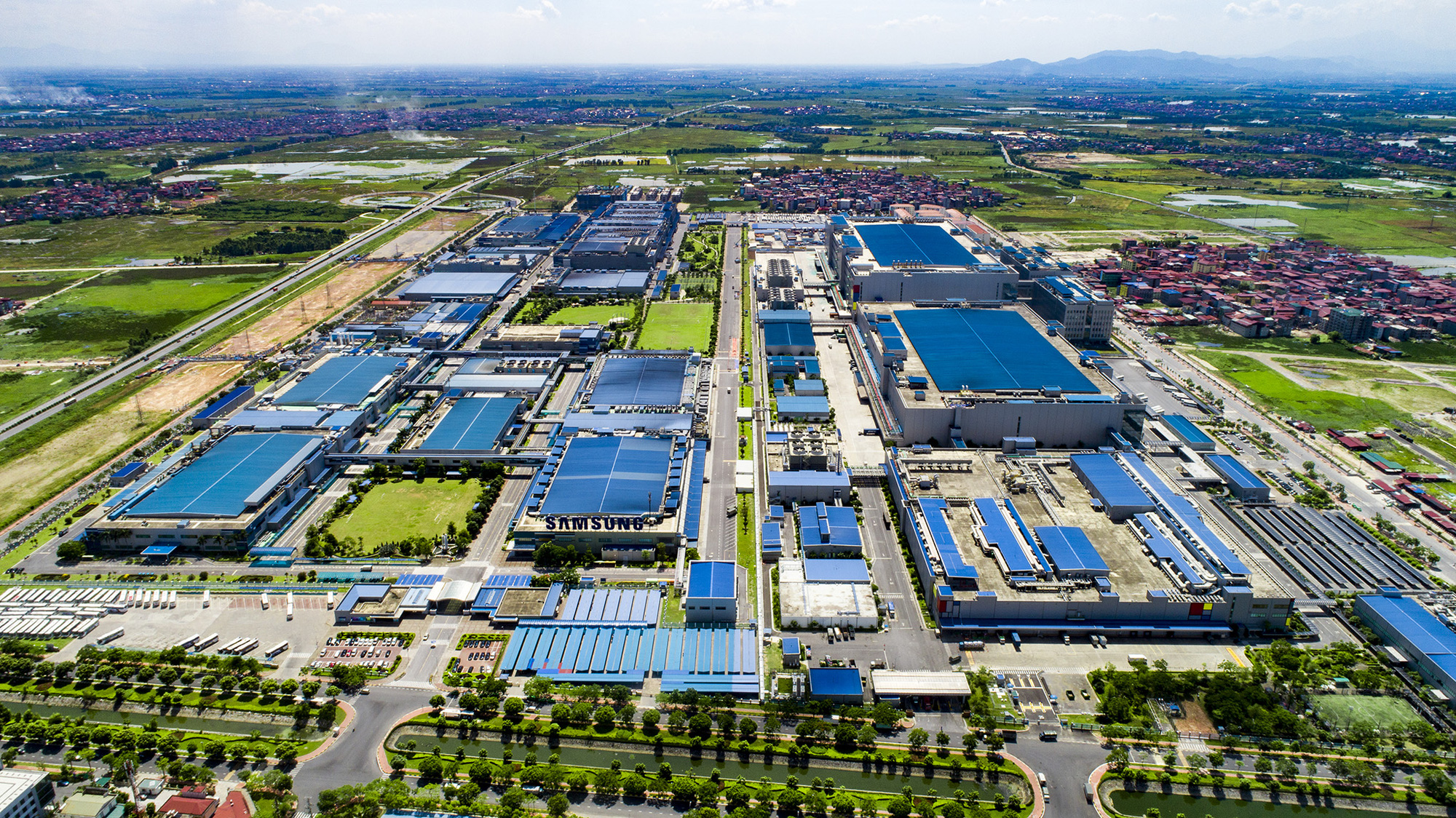
Foreign investment in Industrial Zones (IZs) is becoming a strong development trend in Vietnam. In recent years, Vietnam has become an attractive destination for foreign investors, especially in industrial zones. According to data from the Foreign Investment Agency (Ministry of Planning and Investment), as of the end of September 2023, there were 28,498 FDI projects licensed in Vietnam with a total registered capital of USD 478.8 billion.
Foreign investment in Industrial Zones (IZs) is becoming a strong development trend in Vietnam. In recent years, Vietnam has become an attractive destination for foreign investors, especially in industrial zones. According to data from the Foreign Investment Agency (Ministry of Planning and Investment), as of the end of September 2023, there were 28,498 FDI projects licensed in Vietnam with a total registered capital of USD 478.8 billion. Of these, 5,525 industrial zone projects were registered with a total capital of USD 125.4 billion, accounting for 26.1% of the total registered capital of FDI projects.
The year 2025 marks significant changes in regulations and investment procedures, requiring investors to understand them to implement projects effectively.
Important Changes in 2025
From January 15, 2025, according to the amended and supplemented Investment Law, Planning Law, and Bidding Law (Law No. 57/2024/QH15), foreign investment procedures in industrial zones in Vietnam have significant changes as follows:
1. Special investment procedures (Article 36a of the 2020 Investment Law, supplemented by Clause 8, Article 2 of Law No. 57/2024/QH15):
Investors can choose to register investments under special procedures for projects in industrial zones, export processing zones, high-tech zones, and other functional zones. The applicable sectors include:
a. Building innovation centers, research and development (R&D) centers, especially in fields such as semiconductor integrated circuit industries, component design and manufacturing technology, integrated electronic microcircuits, flexible electronics, chips, and semiconductor materials.
b. Investment in priority development of high-tech sectors, producing high-tech products listed in the list of high-tech products encouraged by the Prime Minister's decision.
For these projects, investors do not need to perform procedures such as investment policy approval, technology appraisal, environmental impact assessment, detailed planning, construction permits, and related procedures.
2. Adjustment of investment policy approval authority (Clause 2, Article 31 of the 2020 Investment Law, amended and supplemented by Clause 5, Article 2 of Law No. 57/2024/QH15):
Expanding the list of projects under the approval authority of the Prime Minister. Specifically, it includes investment projects for the construction and operation of infrastructure in industrial zones and export processing zones; and investment projects for the construction of new ports, and port areas with an investment capital of under 2,300 billion VND for special seaports.
3. Amendment and supplement of the order of investment and business sectors with conditions (Appendix IV of the 2020 Investment Law, amended and supplemented by Clause 11, Article 2 of Law No. 57/2024/QH15).
These changes aim to help foreign investors execute projects in industrial zones in Vietnam, especially in high-tech and innovation fields.
II. Investment Process From A-Z
According to Article 32 of the 2020 Investment Law, foreign investment projects in industrial zones that conform to the planning approved by the competent authority must be approved by the Industrial Zone Management Board. Therefore, foreign investment projects in industrial zones need investment policy approval.
d. Documents proving the legal status of the investor.
2. Investment project documents:
a. Investment project proposal (including details such as objectives, scale, investment capital, financing plan, location, duration, progress, land status, social impact, environmental impact assessment, etc.).
b. Feasibility study report (if required by construction law).
c. Detailed business plan.
d. Land use plan.
e. BCC contract (if the investment project is in the form of a BCC contract).
3. Financial capability documents:
a. Financial reports of the investor (at least the last two years) or other documents proving financial capability.
b. Financial support commitment from the parent company or financial institutions.
c. Financial guarantee from a financial institution.
d. Proof of legal capital sources.
4. Copies of land use rights documents or documents confirming land use rights (if not requesting land allocation or lease from the state).
5. Explanation of technology used in the investment project according to technology transfer laws (if the project is subject to technology appraisal).
6. Other documents related to the investor’s conditions and capabilities as required by law (if any).
2. Step 2:Investors find suitable industrial zones and negotiate with infrastructure companies on location, area, services, price, fees, and payment methods. (Article 35, Decree 31/2021/ND-CP)
3. Step 3: Submit documents to the competent authority (Article 34, Decree 31/2021/ND-CP, Article 39 of the Investment Law)
1. Submit documents to the Department of Planning and Investment where the investor will carry out the investment project.
2. If the project is in a high-tech zone with a High-Tech Zone Management Board, submit the documents to the High-Tech Zone Management Board.
1. For projects approved for investment policy: 5 working days from the receipt of the investment policy approval decision or the decision to adjust investment policy approval.
2. For projects approved for investment policy, and the investor has won the auction or tender: Submit a request for an investment registration certificate within 5 working days from receiving the request letter.
3. For projects under the approval of the Economic Zone Management Board: The Economic Zone Management Board decides to approve the investor and issue the investment registration certificate simultaneously.
4. For projects not requiring an investment registration certificate: If desired, submit a request for an investment registration certificate along with a valid copy of the investment policy approval decision and a valid copy of the investor approval decision (if any) within 5 working days from receiving the request.
III. Important Notes
Common Mistakes
1. Incomplete or invalid documents
a. Preparing incomplete investment documents or failing to comply with legal regulations can lead to delays or project approval rejection.
b. Ensure that all necessary documents are fully prepared and comply with current legal requirements.
2. Incorrect declaration of information
a. Providing inaccurate information can damage credibility and affect the approval process.
b. Carefully check all information before submitting documents and ensure their accuracy.
3. Failure to comply with deadlines
a. Delays in submitting documents or failing to meet required deadlines may result in the cancellation of the documents or require resubmission from the beginning.
b. Plan in detail and strictly adhere to the set deadlines.
Some Important Notes
1. Thoroughly research the market and business sectors
a. Before investing in industrial zones in Vietnam, thorough market and business sector research is necessary.
b. This helps investors identify market demand, the competitiveness of their products/services, and the development potential of the industry.
c. It also helps investors select the appropriate industrial zone and determine an effective business strategy.
2. Choosing the right industrial zone: Several factors to consider when choosing an industrial zone include:
a.Location: The industrial zone needs to have a convenient location for transportation and logistics.
b. Infrastructure: The industrial zone must have complete infrastructure to support the production and business activities of enterprises.
c. Investment policies: Different industrial zones will have different investment policies. Foreign investors should carefully examine these policies to maximize their advantages.
d. Land lease price: Land lease prices in industrial zones vary, and investors should choose the zone with a lease price that fits their budget.
3. Hire a legal consultant lawyer
Investment laws in Vietnam are relatively complex and difficult to understand for foreign investors. Therefore, foreign investors should hire a lawyer for legal consultation to ensure their investment projects comply with the law. This is an important factor to ensure legal safety for their business operations.
Tips to Speed Up Progress
1. Prepare documents for multiple procedures simultaneously:
a. Carrying out necessary procedures concurrently helps save time and reduce delays.
b. Plan in detail and assign tasks to each relevant department.
2. Closely monitor the processing progress of documents:
a. Tightly monitor the document processing process to detect and resolve issues promptly.
b. Use project management tools to track progress and update regularly.
3. Respond quickly to additional requests:
a. Respond quickly and thoroughly to additional requests from authorities to speed up the approval process.
b. Prepare necessary documents and information in advance to respond promptly.
Individuals engaged in affiliate marketing who earn income from commissions, advertising and other sources must fulfill their tax liabilities in accordance with regulations. How much tax must these individuals pay?
Vietnamese workers working for foreign organizations and individuals in Vietnam need to know which agencies or organizations they may request support from when their rights and interests are affected, as well as what they must do after entering into a labor contract.
Decree No. 371/2026/ND-CP detailing the recruitment and management of Vietnamese workers working for foreign organizations and individuals in Vietnam, effective from November 15, 2026, introduces several changes concerning the reporting responsibilities of the parties involved in recruitment.
The resolution on national security strategy provides a broader approach to protecting national security for a period in which technological advance, economic interdependence and non-traditional security risks are increasingly interconnected.
How does Circular No. 118/2026/TT-BTC regulate the application of International Accounting Standards in Vietnam? Which enterprises may choose to apply these Standards, and what principles must they follow?
The Urban Development Law is expected to unlock resources and enable Vietnamese cities to develop on the basis of productivity, technology and regional connectivity and become new growth poles of the economy.
A number of new Decrees officially take effect from October 1, 2026, directly affecting various areas. Below is a list of Decrees taking effect in October 2026.
A roundup of key new policies and regulations taking effect in October 2026, covering banking, social policies, taxation, investment, and other areas of interest to individuals and businesses.
The 2026 amended Law on Vietnamese Guest Workers has amended and supplemented various regulations on worker source preparation, training fees, recruitment, contracts, licenses, and responsibilities of enterprises providing the service of sending Vietnamese workers abroad as guest workers.
Circular No. 48/2026/TT-BCT introduces a number of new regulations on procedures for importing goods under tariff quotas, covering dossiers, procedures, and the confirmation of tariff quotas for traders.

 English
 RSS
RSS