 English
 RSS
RSS
I. Introduction
The importance and potential of the footwear manufacturing industry in Vietnam
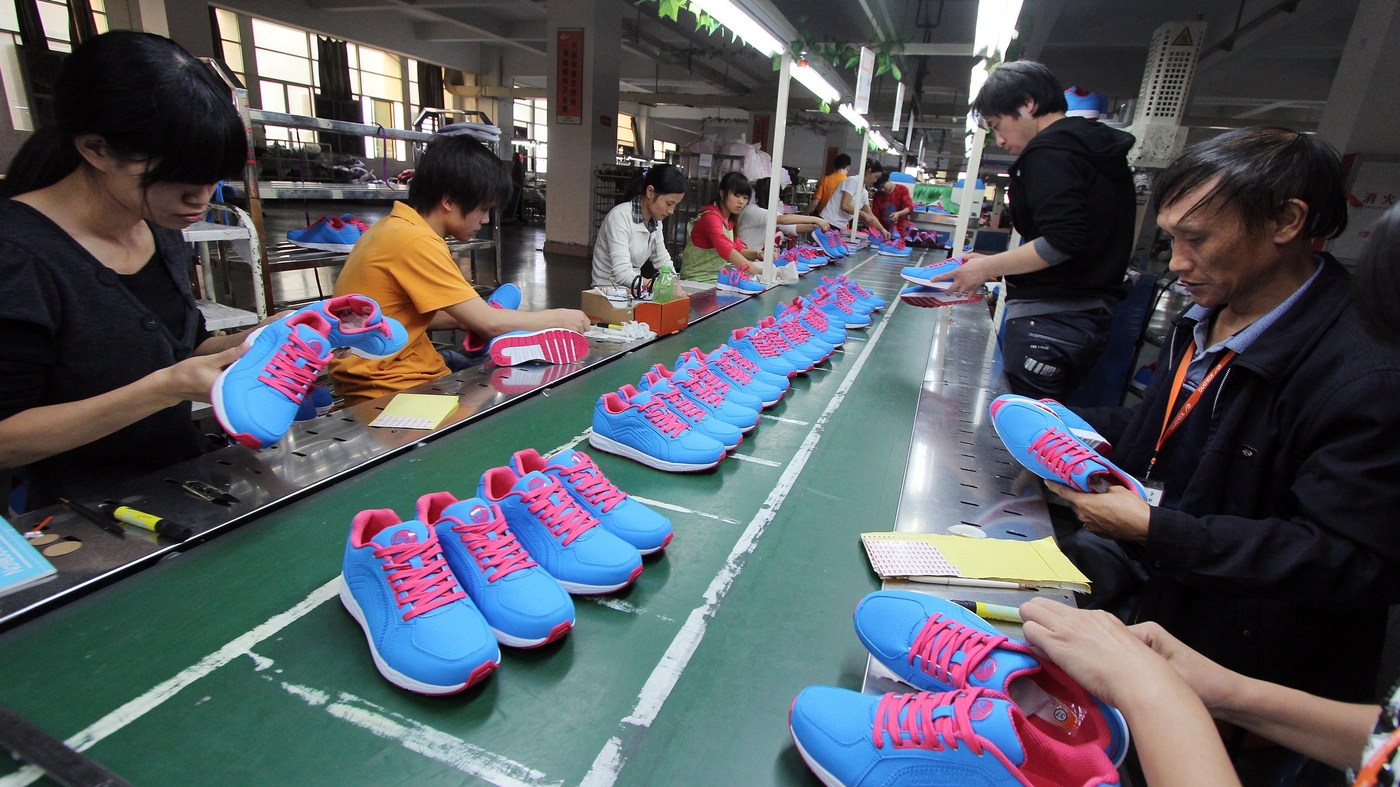
The footwear manufacturing industry is one of Vietnam’s key export sectors, contributing significantly to international trade revenue and creating millions of jobs. With competitive labor costs, a skilled workforce, and a favorable geographic location, Vietnam has become the world’s third-largest footwear manufacturing hub, after China and India.
Vietnam—An attractive destination for foreign investors in the footwear industry
With its open-door policy, new-generation free trade agreements (such as EVFTA, CPTPP, RCEP), and the rapid development of industrial infrastructure, Vietnam is increasingly attracting foreign investors, especially in the footwear sector — a field with relatively few investment restrictions and high feasibility for project implementation.
This article provides a comprehensive legal and practical guide for foreign investors to establish a footwear manufacturing enterprise in Vietnam in a compliant and effective manner.
II. Applicable Legal Framework
-
Decree No. 31/2021/ND-CP guiding the implementation of the Law on Investment
-
Decree No. 01/2021/ND-CP guiding the implementation of the Law on Enterprises
-
Relevant circulars and guiding documents
-
Specialized laws: Law on Environmental Protection, Law on Construction, Law on Fire Prevention and Fighting, Law on Taxation, and relevant local regulations.
III. Investment Conditions in the Footwear Manufacturing Sector
-
Market access for foreign investors: Footwear manufacturing is not listed as a prohibited or restricted business sector. Foreign investors may own up to 100% capital, as per Appendix I of Decree No. 31/2021/ND-CP.
-
Non-conditional sector: According to WTO commitments and bilateral/multilateral FTAs, the footwear sector is not subject to specific investment conditions. However, investors must verify the business line code (1520) in accordance with the Vietnamese economic sector classification system to ensure proper business scope.
-
Capital, technology, environmental, and labor requirements:
-
No mandatory minimum capital; however, investors must demonstrate adequate financial and technological capacity.
-
Environment: Compliance with the Law on Environmental Protection 2020 and Decree No. 08/2022/ND-CP.
-
Labor: Compliance with the Labor Code 2019 and Decree No. 145/2020/ND-CP.
-
Technology: Must not use prohibited technologies.
-
IV. Selection of Investment Location
a. Industrial Zones (IZs):
-
Advantages: Ready infrastructure, support services, and expedited licensing processes.
-
Benefits: Preferential tax and land rent policies; simplified administrative procedures.
-
Usually exempt from land use purpose conversion.
b. Export Processing Zones (EPZs):
-
Suitable for enterprises targeting 100% exports.
-
Enjoy special tax incentives; however, limited in selling goods to the domestic market (Clause 11, Article 26, Decree 35/2022/ND-CP).
c. Outside IZs/EPZs:
-
Lower land rent.
-
More complex procedures for land use conversion, environmental appraisal, and construction.
-
Suitable for businesses requiring location flexibility or proximity to raw materials or labor sources.
Note: Location selection must consider zoning plans, access to raw materials, labor sources, tax incentives, and logistics.
V. Legal Procedure for Business Establishment
-
Investment Policy Approval
Required for projects falling under Articles 30–32 of the Law on Investment 2020 (e.g., large-scale projects, land use, environmental impacts). -
Investment Registration Certificate (IRC)
-
Submission to the Department of Planning and Investment (DPI) or Industrial Zone Management Authority.
-
Timeline:
-
5 working days from receipt of investment policy approval (for applicable projects);
-
15 working days from submission of a valid application (for non-applicable projects).
-
-
Legal basis: Articles 38–41 of the Law on Investment 2020.
-
Enterprise Registration Certificate (ERC)
Granted upon fulfillment of the following:
-
Business lines not prohibited;
-
Compliant company name;
-
Valid application dossier;
-
Payment of registration fees.
-
Legal basis: Article 27 of the Law on Enterprises 2020.
-
Post-ERC Procedures
-
Seal making, bank account opening, and tax registration (per Circular 86/2024/TT-BTC and Article 43 of the Law on Enterprises 2020).
-
Labor registration and social insurance: Labor Code and Social Insurance Law.
-
Environmental permit: Law on Environmental Protection 2020.
-
Fire safety certificate: Decree No. 136/2020/ND-CP.
-
Construction permit: Clause 30, Article 1, Law on Construction 2014 (amended in 2020).

VI. Applicable Investment Incentives
Foreign investors may enjoy various incentives, provided eligibility conditions are met:
-
Corporate Income Tax (CIT) incentives: Reduced rates, tax holidays, especially in preferential zones or key industrial parks (Article 16, Decree 218/2013/ND-CP).
-
Import duty exemption: For imported machinery and equipment forming fixed assets (Law on Export and Import Duties 2016).
-
Land rent incentives: Exemptions or reductions depending on location (Article 38, Decree 103/2024/ND-CP).
-
EPZ-specific benefits: Preferential treatment in VAT and customs duties.
-
Supporting industry incentives: As per Decree 111/2015/ND-CP and local investment promotion programs.
VII. Estimated Timelines and Common Risks
-
Timeframe: Varies by procedure; initial legal establishment generally takes 1–3 months.

-
Common legal and practical risks:
-
Incomplete or incorrect documentation leading to delays.
-
Inappropriate site selection causing licensing or infrastructure issues.
-
Non-compliance with environmental or fire safety regulations resulting in suspension or penalties.
-
Policy changes or local regulatory inconsistencies complicate implementation.
-
Repeated revisions of the application due to inconsistencies or missing documents.
-
VIII. Conclusion and Recommendations
Vietnam’s footwear industry continues to experience robust growth and offers significant opportunities for foreign investors. Legally, establishing a manufacturing enterprise in this field is feasible, supported by an increasingly transparent legal framework and favorable policies.
To ensure a smooth and compliant investment process, investors are advised to
-
Thoroughly research current legal regulations, particularly those concerning foreign investment, the environment, construction, and labor.
-
Engage with local authorities and IZ/EPZ management boards to understand zoning plans and specific requirements.