
8 cases for mandatory face masks for COVID-19 prevention and control

This is the content prescribed in the Guidance on using face masks in public places for COVID-19 prevention and control issued with Decision No. 2447/QD-BYT dated September 06, 2022, of the Ministry of Health.

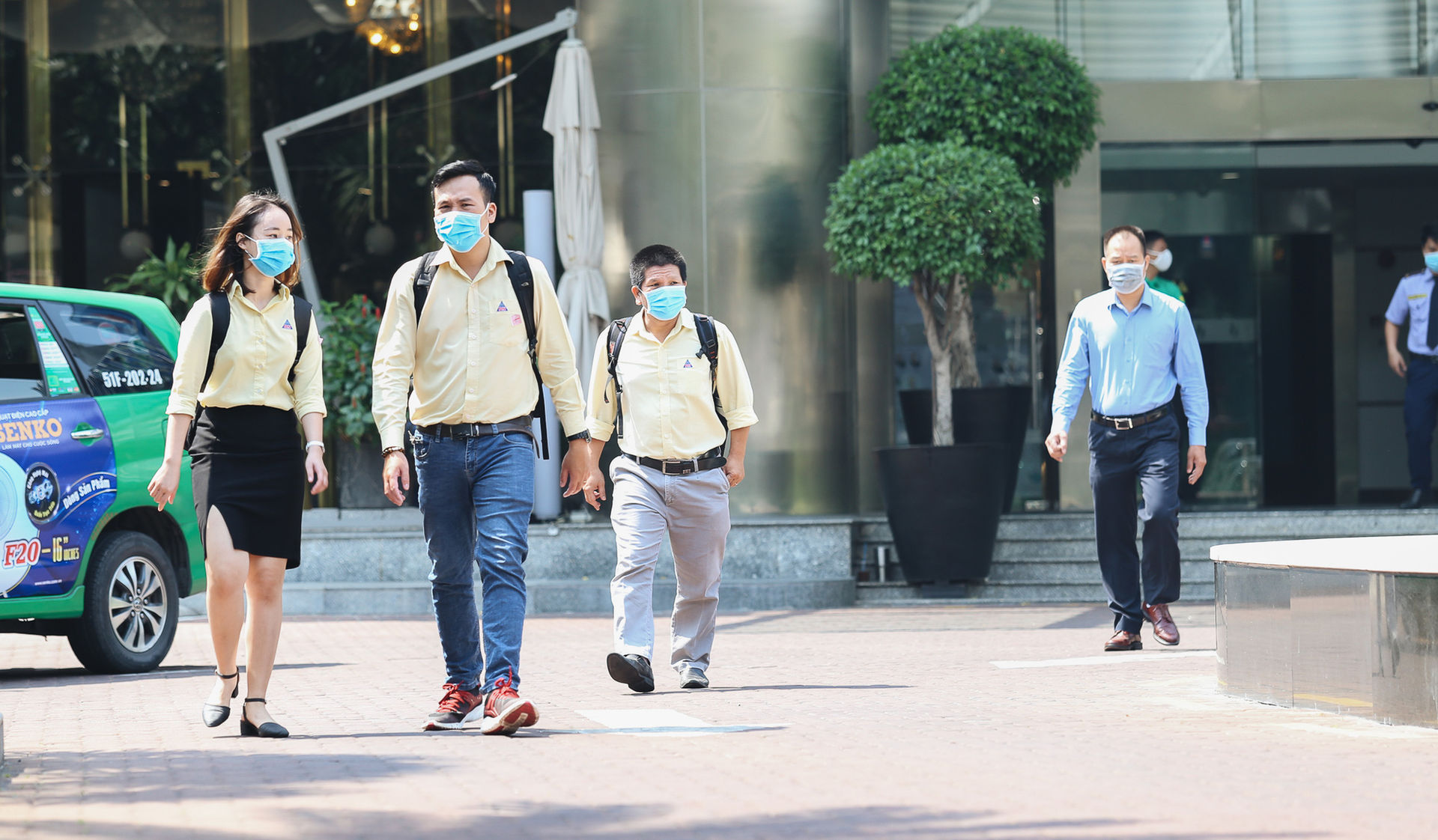
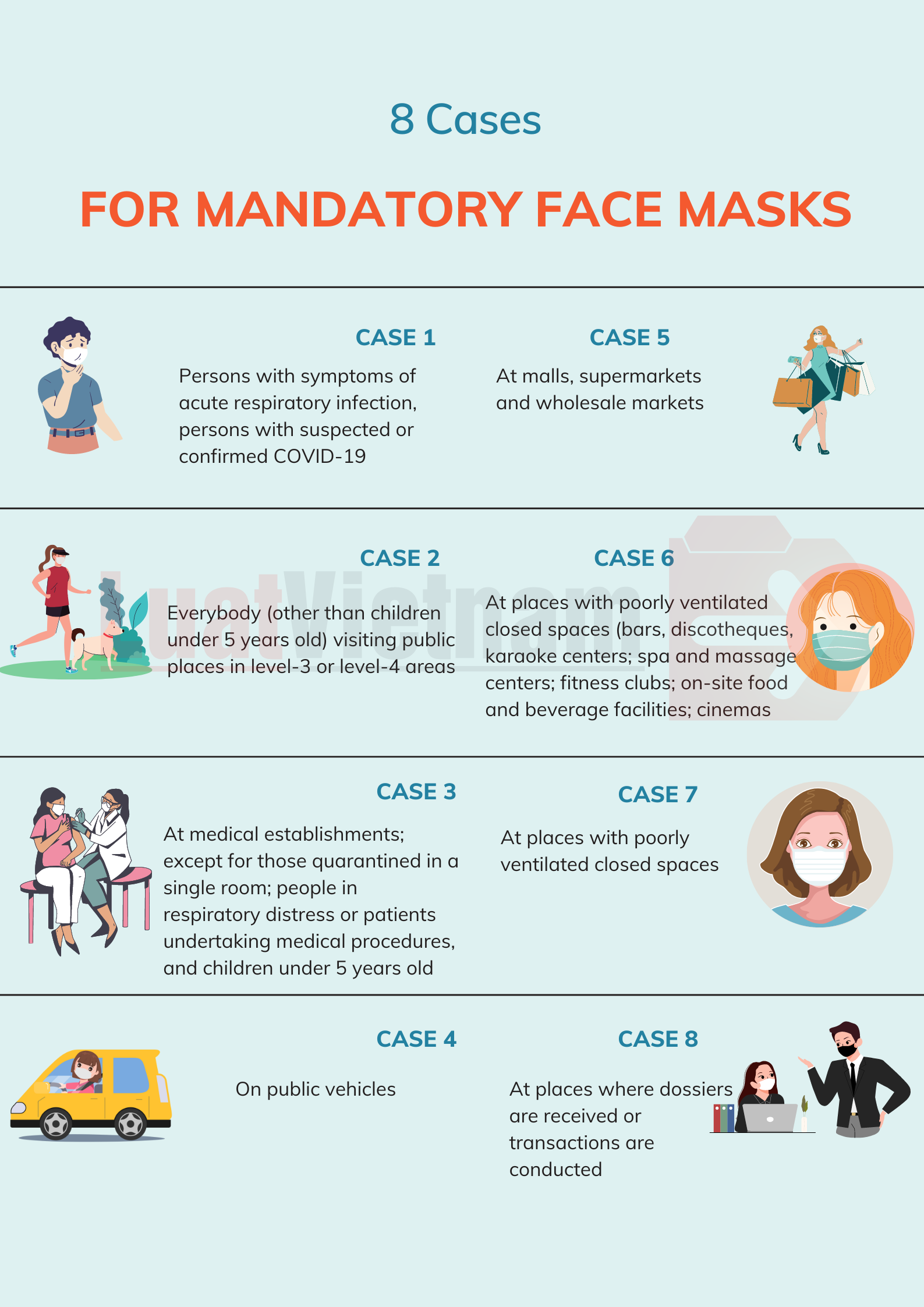
In particular, the Ministry of Health points out 8 cases for mandatory face masks for COVID-19 prevention and control, including:

(1) Persons with symptoms of acute respiratory infection, persons with suspected or confirmed COVID-19.

(2) Everybody (other than children under 5 years old) visiting public places in level-3 or level-4 areas.

(3) At medical establishments; quarantine zones; accommodations hosting people undertaking medical quarantine or supervision: Face masks are required for everybody (except for those who are quarantined in a single room; people in respiratory distress or patients undertaking medical procedures, and children under 5 years old).

(4) On public vehicles: face masks are required for passengers; drivers, service staff on public vehicles; service staff, managers, and workers at stations, harbors, and waiting rooms who are in direct contact with passengers.
 

8 cases for mandatory face masks
8 cases for mandatory face masks for COVID-19 prevention and control (Illustration)

(5) At malls, supermarkets, and wholesale markets: Face masks are required for service staff, managers, and workers in direct contact with customers.

(6) At places with poorly ventilated closed spaces (bars, discotheques, karaoke centers; spa and massage centers; fitness clubs; on-site food and beverage facilities; cinemas, theaters... Face masks are required for service staff, managers, and workers in direct contact with customers.

(7) In places with poorly ventilated closed spaces: Face masks are required for service staff, managers, workers, and salespersons in direct contact with customers and participants.

(8) At places where dossiers are received or transactions are conducted: Face masks are required for staff receiving dossiers and staff conducting transactions when being in direct contact with customers.
8 cases for mandatory face masks
Others apart from places and persons are encouraged to wear face masks in public places.

1900 6192 để được giải đáp qua tổng đài
090 222 9061 để sử dụng dịch vụ Luật sư tư vấn (CÓ PHÍ)
Đánh giá bài viết:
(1 đánh giá)
Bài viết đã giải quyết được vấn đề của bạn chưa?
Rồi Chưa

Tin cùng chuyên mục

Vietnam Law Day promotes respect for legislation and culture of legal compliance

Vietnam Law Day promotes respect for legislation and culture of legal compliance

Vietnam Law Day promotes respect for legislation and culture of legal compliance

Observed annually on November 9, Vietnam Law Day seeks to promote respect for the constitution and the law, raise public awareness of legal compliance and encourage people to make respect for regulations an integral part of everyday life. This year’s activities place greater emphasis on practical, people-centred legal education and digital transformation.

Proposed programme strives for at least 50 per cent drug-free communes and wards nationwide by 2030

Proposed programme strives for at least 50 per cent drug-free communes and wards nationwide by 2030

Proposed programme strives for at least 50 per cent drug-free communes and wards nationwide by 2030

The Government has recently proposed a national target programme on drug and crime prevention and control for the 2026-35 period, that aims for at least 50 per cent of communes and wards nationwide to be drug-free by 2030, binding the responsibilities of grassroots Party Committees and local authorities.

Vietnam well-positioned to attract high-quality European investment: insiders

Vietnam well-positioned to attract high-quality European investment: insiders

Vietnam well-positioned to attract high-quality European investment: insiders

Vietnam has established a considerable manufacturing and export base, giving it an advantage in attracting investment from European corporations. However, amid the restructuring of global supply chains, the key objective is not merely to attract more investment, but also to enhance the quality of investment and the value it generates.