Wage payment by products: Is it legal or not?

Some employers pay wages by-products that are manufactured and traded on their own in order to process the inventories and get financial optimization. Whether this action is legal or not?

1. Is it legal for paying wages by product?

Pursuant to Article 94, Labor Code 2019, the employer shall pay wages directly, fully, and timely to employees.

The Code has no specific definition of a wage which is prescribed as the money amount which is paid by the employer to the employee as agreed upon for the latter to do a certain job.

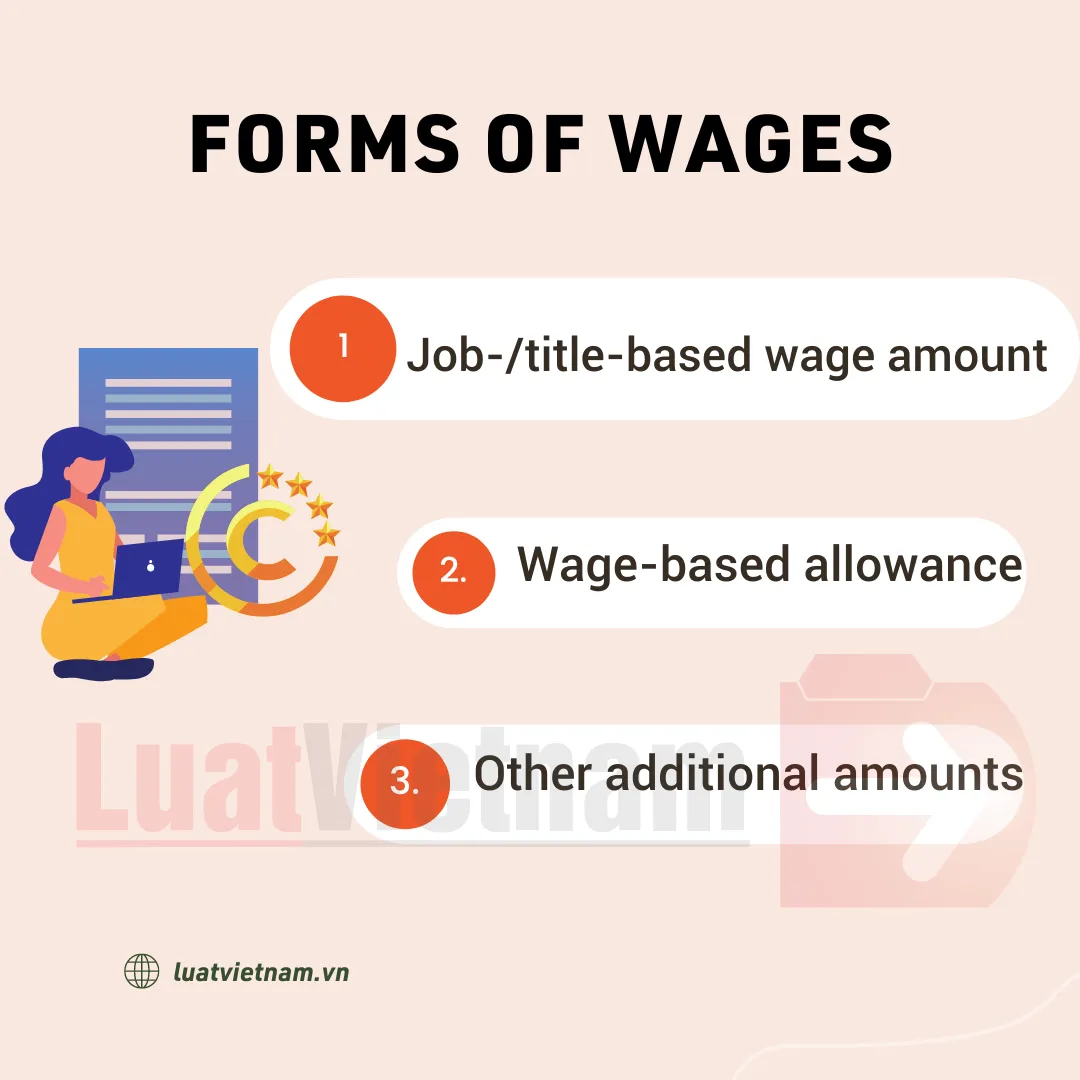
Wages include:

  • Job- or title-based wage amount:  The job- or title-based wage amount must not be lower than the minimum wage level.
  • Wage-based allowance.
  • Other additional amounts.

Also in accordance with Clause 1, Article 95 of this Code, the employer shall pay wages to employees based on agreed wage levels, labor productivity, and work quality.

Wages written in labor contracts and wages paid to employees shall be calculated in Vietnam dong If the employee is a foreigner working in Vietnam, wages shall be calculated in a foreign currency.

From the above regulations, it can be emphasized that the employer must pay the employee by money amount, not by products. This wage can be paid directly by cash or by transfer via personal accounts of workers at banks.
Is it legal for paying wages by product?

2. What are the fines for employers for paying wages by products?

The employer is not allowed to pay wage by products to his/her employees. 

Speaking in other ways, in accordance with Clause 2, Article 95 of the Labor Code 2019, wages written in labor contracts and wages paid to employees shall be calculated in Vietnam dong.

Therefore, the fine shall be imposed for any employer that forces his/her employees to receive products instead of money for failing to pay or paying inadequate wages to the worker compared to that agreed in the labor contract.

Pursuant to Article 17, Decree No. 12/2022/ND-CP, fines shall be imposed on any employer for this act as follows:

Number of workers

Fine for the employers who are individuals

Fine for the employers who are organizations

Between 01 and 10 employees

+ VND 5 - 10 million

+ VND 10 - 20 million

Between 11 and 50 employees

+ VND 10 - 20 million

+ VND 20 - 40 million

Between 51 and 100 employees

+ VND 20 - 30 million

+ VND 40 - 60 million

Between 101 and 300 employees

+ VND 30 - 40 million

+ VND 60 - 80 million

301 employees and more

+ VND 40 - 50 million

+ VND 80 - 100 million

Remedial measures Compelling the employer to pay full wages and the interest on the late payment or underpayment thereof to the employee, calculated according to the highest demand deposit interest rate of the state commercial banks announced at the time the penalties are imposed on the violations.

Is it legal for paying wages by product?

3. Pay bonuses by products: is it legal or not?

In accordance with the Article 104, Labor Code 2019, bonus is defined as follows:

1. Bonus is a sum of money or asset or other forms paid or given by the employer to the employee on the basis of production and business results and the employee’s work performance.

2. The employer shall decide on and publicize bonus regulations at the workplace after consulting the grassroots-level employees’ representative organization, if available.

In accordance with law provisions, bonus is not the compulsory policy of the company. The employer shall decide whether to pay bonuses for their employees or not based on the current situations of production, business, productivity as well as financial conditions of the enterprise.

The employer can choose the form of bonus by himself/herself. In particular, the employer can pay a bonus by cash or assets such as real estate, cars, housewares which are produced by them or other forms such as travels...

Although the employer must pay wages by money in accordance with laws by the Labor Code 2019 is so flexible when allows the employer to pay bonus by products.

This regulation not only can help every enterprise solve his/her own financial problems but also encourage employees to their valuable contributions to their work.

Here is the relevant information to the question: Is it legal for paying wages by product? 

1900 6192 để được giải đáp qua tổng đài
090 222 9061 để sử dụng dịch vụ Luật sư tư vấn (CÓ PHÍ)
Đánh giá bài viết:

Tin cùng chuyên mục

Procedures for obtaining approval for listing stocks on foreign securities markets from January 29, 2026

Procedures for obtaining approval for listing stocks on foreign securities markets from January 29, 2026

Procedures for obtaining approval for listing stocks on foreign securities markets from January 29, 2026

To list stocks on foreign securities markets, joint-stock credit institutions must obtain approval from the State Bank of Vietnam. Below are the procedures for obtaining approval for listing stocks on foreign securities markets, in accordance with Circular No. 47/2025/TT-NHNN, which takes effect on January 29, 2026.

Law on Specialized Court provides professional adjudicatory mechanism at International Financial Center

Law on Specialized Court provides professional adjudicatory mechanism at International Financial Center

Law on Specialized Court provides professional adjudicatory mechanism at International Financial Center

The establishment of the International Financial Center necessitates an appropriate judicial institution capable of resolving cross-border investment and business disputes. In this context, the Law on Specialized Court at the International Financial Center was enacted as a key legal foundation for the application of a professional adjudicatory mechanism, thereby enhancing Vietnam’s profile and competitiveness in the international arena.

Disputes Over Bank Credit Contracts

Disputes Over Bank Credit Contracts

Disputes Over Bank Credit Contracts

In recent years, along with the strong growth of the economy and the increasing demand for loans, credit activities in Vietnam have expanded both in scale and scope. However, accompanying this development is the reality that disputes over credit contracts have become increasingly common, not only rising sharply in number but also becoming more complex in nature and extent.

Risks of Ratification in International Investment

Risks of Ratification in International Investment

Risks of Ratification in International Investment

Vietnam is shaping strategic steps to become a destination for global capital flows, most notably with the plan to establish international financial centers in Ho Chi Minh City and Da Nang. As the doors of integration open wider, domestic enterprises will have opportunities to access large-scale investment projects, but at the same time must also face more sophisticated legal risks.

Inheritance Estates of Foreigners Deceased in Vietnam

Inheritance Estates of Foreigners Deceased in Vietnam

Inheritance Estates of Foreigners Deceased in Vietnam

The strong development of international exchanges has made civil relations with foreign elements increasingly common in Vietnam. Among them, inheritance is a particularly complex field, as it not only relates to property rights and personal rights but is also simultaneously governed by multiple legal systems. Therefore, a comprehensive study of the inheritance estate of foreigners in Vietnam is not only of theoretical significance but also of practical value, helping to ensure the legitimate rights and interests of the parties

Loan Security: A Financial Risk Management Tool for Vietnamese Enterprises

Loan Security: A Financial Risk Management Tool for Vietnamese Enterprises

Loan Security: A Financial Risk Management Tool for Vietnamese Enterprises

As Vietnam prepares to establish International Financial Centers in Ho Chi Minh City and Da Nang, domestic enterprises will have greater opportunities to access large capital sources and participate more deeply in the global financial market. However, alongside these opportunities come significant risks, especially in lending and borrowing activities.