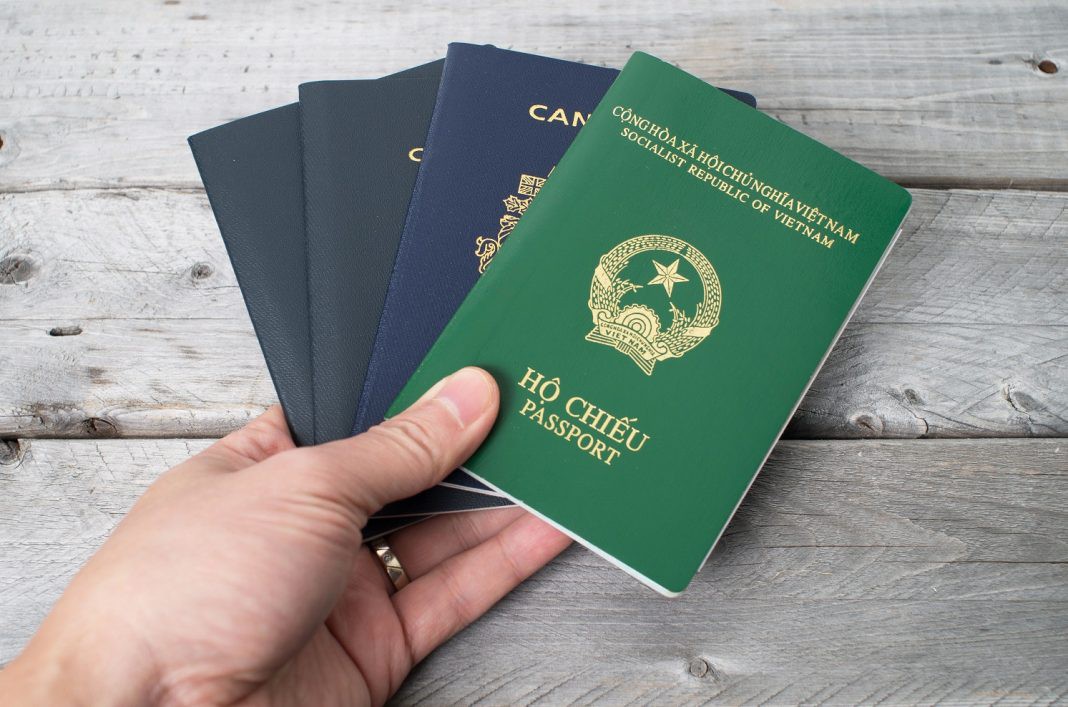
The Law on Vietnamese Nationality has undergone several major revisions since its initial enactment. The most recent version was amended in 2008 and supplemented in 2014, forming a comprehensive legal framework on nationality matters.
Current Legal Framework on Vietnamese Nationality
The Law on Vietnamese Nationality has undergone several major revisions since its initial enactment. The most recent version was amended in 2008 and supplemented in 2014, forming a comprehensive legal framework on nationality matters.
The Party and the State of Vietnam have consistently affirmed that overseas Vietnamese are an “inseparable part” of the national community (according to nhipcaudautu). To realize this policy and attract overseas Vietnamese resources, the draft amendment to the Nationality Law proposes expanding the rights to acquire or restore Vietnamese nationality for overseas Vietnamese.
Key Provisions on Nationality
1. Dual Nationality
Vietnam maintains a restrictive policy on dual nationality.
According to Article 4 of the Law on Vietnamese Nationality: “The State of the Socialist Republic of Vietnam recognizes that Vietnamese citizens have only one nationality, which is Vietnamese nationality, unless otherwise provided for by this Law.” Although exceptions are permitted, the general policy is to limit dual nationality.
Foreign nationals who wish to acquire Vietnamese nationality are usually required to renounce their original nationality under Clause 3 Article 19 of the Law on Nationality, except in special cases where exemption is granted by the President.
2. Exceptions Permitting Dual Nationality
Overseas Vietnamese Who Have Not Lost Their Vietnamese Nationality
According to Article 13 of the Law on Nationality, Persons who retained Vietnamese nationality as of July 1, 2009, and those who are deemed Vietnamese nationals under the provisions of this Law, are recognized as Vietnamese nationals.
Acquiring Vietnamese Nationality Without Renouncing Foreign Nationality
They satisfy all conditions for acquiring Vietnamese nationality;
They have made special contributions to the cause of national construction and defense of Vietnam and retaining foreign nationality is beneficial to the Socialist Republic of Vietnam;
Their retention of foreign nationality complies with the laws of the foreign country;
Renouncing foreign nationality would negatively affect their rights abroad;
They do not use foreign nationality to harm the legal rights and interests of Vietnamese agencies, organizations, or individuals, or to threaten national security or public order.
Reacquiring Vietnamese Nationality Without Renouncing Foreign Nationality
According to Clause 5 Article 23 of the Law: A person may retain their foreign nationality when reacquiring Vietnamese nationality if they:
Are a spouse, parent, or child of a Vietnamese citizen;
Have made special contributions to Vietnam;
Are deemed beneficial to the Vietnamese State.
Decree 16/2020/ND-CP (Article 14) requires similar conditions as in the case of naturalization.
Vietnamese Children Adopted by Foreigners
According to Article 37 of the 2008 Law on Nationality: Vietnamese children adopted by foreign nationals may retain their Vietnamese nationality, resulting in dual nationality.
Future Reform Trends
1. Need to Attract Foreign Investment and International Experts
Vietnam is shifting toward high-quality FDI and needs a more flexible nationality policy to:
Attract foreign investors, experts, and scientists;
Encourage qualified overseas Vietnamese to return and contribute.
Impact: The current restriction on dual nationality discourages those unwilling to renounce their original nationality. Allowing retention of original nationality would help remove legal barriers and enhance Vietnam's competitiveness in attracting talent.
2. Pressure from the Vietnamese Overseas Community
There are approximately 6 million Vietnamese living in over 130 countries (source: Dan Tri). Many have lost their Vietnamese nationality upon naturalizing in other countries, resulting in difficulties such as:
Maintaining ties with Vietnam;
Investing, inheriting property, or returning to live in Vietnam.
Impact: The current law lacks flexibility, making it difficult to restore Vietnamese nationality. The draft amendment proposes:
Allowing reacquisition of Vietnamese nationality without renouncing foreign nationality;
Simplifying administrative procedures.
3. Globalization and International Migration Trends
Migration for education, work, or marriage is increasingly common. Many countries (e.g., Singapore, Canada, South Korea) have adopted flexible dual nationality policies.
Impact: Vietnam needs to update its law to:
Remain competitive in attracting global talent;
Maintain ties with overseas Vietnamese and anticipate international labor mobility.
Acknowledging these challenges, the Ministry of Justice—the lead drafting agency—has published the draft bill and opened it for public consultation.
The April 28, 2025 draft proposes expanding the dual nationality policy. Specifically, it eliminates the requirement in Clause 5 Article 23 of the current law that mandates renunciation of foreign nationality. Instead, individuals seeking to acquire or restore Vietnamese nationality may retain foreign nationality if:
(i) Retention of foreign nationality complies with the law of the foreign country; and
(ii) They do not use foreign nationality to harm the lawful interests of Vietnam.
Example: Mr. Nguyen in the U.S. or Ms. Mai in Australia may reacquire Vietnamese nationality and still hold their U.S. or Australian passports if they meet the two conditions above. However, the draft also requires that dual nationals running for office, being recruited to state positions, or joining the armed forces must renounce their foreign nationality and reside permanently in Vietnam to ensure national security and loyalty to the homeland.
Impacts of the Nationality Law Amendments
1. For Vietnamese Citizens
Review and clarify the rights and obligations of those reacquiring Vietnamese nationality.
Add provisions requiring dual nationals applying for positions in state agencies, political organizations, or the armed forces to renounce foreign nationality and reside in Vietnam—ensuring sovereignty, security, and civic responsibility.
Broaden eligibility to reacquire nationality, allowing both adults and children who previously renounced Vietnamese nationality to regain it, even while retaining foreign nationality.
Clarify definitions of “special contributions” and “beneficial to the State” to improve clarity and enforceability of Article 19.
Under the new principle, “all individuals who have lost Vietnamese nationality and apply for reacquisition” will be considered for reinstatement.
The new policy simplifies conditions for persons of Vietnamese origin (e.g., with Vietnamese parents or grandparents) or those with special contributions, by waiving residency and financial capacity requirements.
Also extends favorable consideration to investors and individuals with special contributions (currently covered under Article 23).
2. For Foreign Nationals
Simplify administrative procedures by reducing required documents and streamlining processing by Vietnamese representative missions abroad.
Authorize the Ministry of Public Security to verify applicants’ backgrounds to ensure political security, and coordinate with overseas missions to expedite applications (nhipcaudautu).
The application process will be streamlined under common procedures regulated by the Government to promote administrative reform in the nationality sector.
All changes to nationality laws will be implemented gradually and carefully to balance economic development with national security.
Conclusion
Vietnam has always regarded the overseas Vietnamese community as an important national resource. The revised Nationality Law continues to embody this policy by facilitating the return of overseas Vietnamese to invest, work, and conduct research, thereby attracting high-quality human resources for national development. In the context of previously restrictive dual nationality rules, understanding the conditions, exceptions, and legal procedures is key to avoiding risks and ensuring a smooth nationality acquisition process that aligns with the laws of both countries.
Individuals engaged in affiliate marketing who earn income from commissions, advertising and other sources must fulfill their tax liabilities in accordance with regulations. How much tax must these individuals pay?
Vietnamese workers working for foreign organizations and individuals in Vietnam need to know which agencies or organizations they may request support from when their rights and interests are affected, as well as what they must do after entering into a labor contract.
Decree No. 371/2026/ND-CP detailing the recruitment and management of Vietnamese workers working for foreign organizations and individuals in Vietnam, effective from November 15, 2026, introduces several changes concerning the reporting responsibilities of the parties involved in recruitment.
The resolution on national security strategy provides a broader approach to protecting national security for a period in which technological advance, economic interdependence and non-traditional security risks are increasingly interconnected.
How does Circular No. 118/2026/TT-BTC regulate the application of International Accounting Standards in Vietnam? Which enterprises may choose to apply these Standards, and what principles must they follow?
The Urban Development Law is expected to unlock resources and enable Vietnamese cities to develop on the basis of productivity, technology and regional connectivity and become new growth poles of the economy.
A number of new Decrees officially take effect from October 1, 2026, directly affecting various areas. Below is a list of Decrees taking effect in October 2026.
A roundup of key new policies and regulations taking effect in October 2026, covering banking, social policies, taxation, investment, and other areas of interest to individuals and businesses.
The 2026 amended Law on Vietnamese Guest Workers has amended and supplemented various regulations on worker source preparation, training fees, recruitment, contracts, licenses, and responsibilities of enterprises providing the service of sending Vietnamese workers abroad as guest workers.
Circular No. 48/2026/TT-BCT introduces a number of new regulations on procedures for importing goods under tariff quotas, covering dossiers, procedures, and the confirmation of tariff quotas for traders.

 English
 RSS
RSS