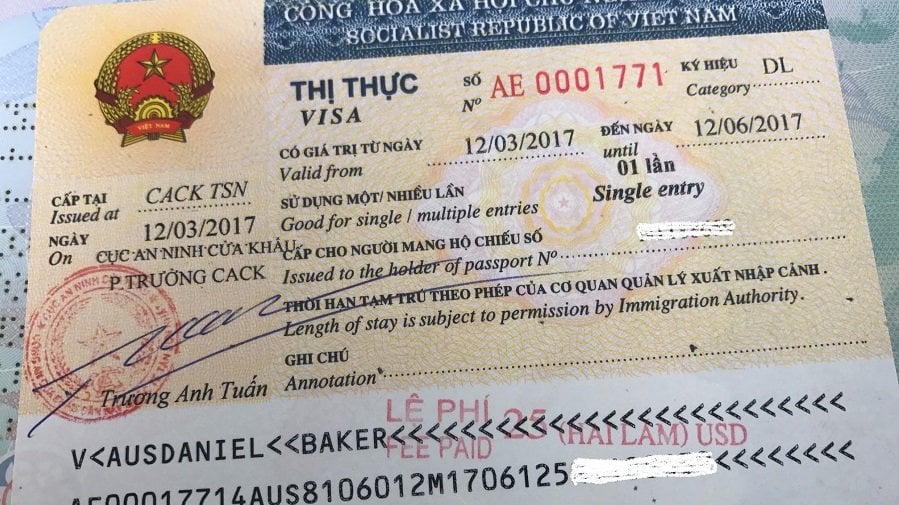
Vietnam’s visa program has become a key gateway for international investors and professionals seeking long-term residence in this dynamic country. The following guide outlines the benefits and privileges available to visa holders as of 2025, along with the corresponding legal bases.
1. Residence Rights and Privileges
Holders of Investment Visas (DT1–DT4 visas) are initially granted a maximum term of up to 5 years (DT1, DT2 up to 5 years; DT3 up to 3 years; DT4 up to 1 year) and are considered for a new visa when the visa expires. According to Article 9 of the Law on Entry, Exit, Transit and Residence of Foreigners in Vietnam
Extended Legal Residence: Holders can maintain continuous residence in Vietnam for up to 5 years, with options for renewal.
Geographic Mobility: Complete freedom to travel and reside anywhere within Vietnam without additional permits.
Property Ownership Rights: Enhanced access to property ownership, including the ability to purchase both residential and commercial properties.
Public Service Access: Full access to Vietnamese public services, including healthcare and social services.
2. Family Benefits and Inclusion
One of the most attractive aspects of the Visa program is its comprehensive family inclusion benefits, designed to keep families together while providing opportunities for all members.
Eligible Family Members: Spouse, dependent children under 18, and dependent parents can be included in the visa application.
Education Access: Children have full access to Vietnamese educational institutions, from primary schools to universities.
Healthcare Benefits: Family members can access both public and private healthcare facilities across Vietnam.
Family Integration Support: Access to language programs and cultural integration services for all family members.
3. Travel Advantages
The Visa offers superior travel flexibility, making it ideal for international business people and frequent travelers.
Multiple Entry Rights: Unlimited entries and exits from Vietnam during the visa validity period.
Extended Stay Periods: No restrictions on the duration of stay within the visa validity period.
Simplified Border Procedures: Access to fast-track immigration processing at international airports.
Regional Travel Benefits: Easier access to ASEAN countries and simplified visa procedures for regional business travel.
4. Work Permit Privileges
With DT1-DT4 visas, if the investor holds a position such as owner or capital contributor of a limited liability company, Chairman of the Board of Directors or member of the Board of Directors of a joint stock company, a work permit is exempted according to Article 154 of the 2019 Labor Code. This not only shortens the procedure, but also reduces the administrative burden, helping investors focus on running the business instead of worrying about personnel procedures.
5. Business Opportunities
The Visa program offers substantial business advantages, making it attractive for entrepreneurs and investors.
Company Ownership: Right to own and operate businesses with 100% foreign ownership in eligible sectors.
Investment Privileges: Access to special investment opportunities and government incentives.
Banking Benefits: Enhanced access to banking services, including premium banking facilities.
Tax Considerations: Access to tax optimization opportunities and investment-related tax benefits.
Conclusion
The Investment Visa Program offers a comprehensive package of benefits—from long-term residency and family support to mobility advantages, labor privileges, and strong business opportunities. It provides a solid foundation for international investors and professionals aiming to live and grow sustainably in Vietnam.
Vietnamese workers working for foreign organizations and individuals in Vietnam need to know which agencies or organizations they may request support from when their rights and interests are affected, as well as what they must do after entering into a labor contract.
Decree No. 371/2026/ND-CP detailing the recruitment and management of Vietnamese workers working for foreign organizations and individuals in Vietnam, effective from November 15, 2026, introduces several changes concerning the reporting responsibilities of the parties involved in recruitment.
The resolution on national security strategy provides a broader approach to protecting national security for a period in which technological advance, economic interdependence and non-traditional security risks are increasingly interconnected.
How does Circular No. 118/2026/TT-BTC regulate the application of International Accounting Standards in Vietnam? Which enterprises may choose to apply these Standards, and what principles must they follow?
The Urban Development Law is expected to unlock resources and enable Vietnamese cities to develop on the basis of productivity, technology and regional connectivity and become new growth poles of the economy.
A number of new Decrees officially take effect from October 1, 2026, directly affecting various areas. Below is a list of Decrees taking effect in October 2026.
A roundup of key new policies and regulations taking effect in October 2026, covering banking, social policies, taxation, investment, and other areas of interest to individuals and businesses.
The 2026 amended Law on Vietnamese Guest Workers has amended and supplemented various regulations on worker source preparation, training fees, recruitment, contracts, licenses, and responsibilities of enterprises providing the service of sending Vietnamese workers abroad as guest workers.
Circular No. 48/2026/TT-BCT introduces a number of new regulations on procedures for importing goods under tariff quotas, covering dossiers, procedures, and the confirmation of tariff quotas for traders.
Bearing the expectation of modernising the national education system, three major laws concerning education are likely to remove long-standing bottlenecks and lay a sustainable policy foundation for the country’s long-term development.

 English
 RSS
RSS