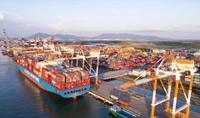
The Minister of Finance has issued Circular No. 40/2026/TT-BTC providing for exemption of certain fees and charges to support production and business in the transport sector. The following are key highlights of Circular No. 40/2026/TT-BTC.
1. Exemption of fees and charges in the aviation sector
In the aviation sector, the policy on fees and charges has seen a notable shift from a 50% reduction for an extended period to a 100% exemption for a short period.
Under Circular No. 64/2025/TT-BTC, applicable from July 1, 2025 to December 31, 2026, aviation organizations and enterprises are entitled to a 50% reduction in various fees and charges. However, the scope of application remains limited, mainly covering certain procedures such as appraisal for issuance of certificates, permits and licenses in civil aviation activities, charges for registration of secured transactions in respect of aircraft, and permits for entry into restricted areas at airports and aerodromes. Notably, several important certificates and permits such as the Air Operator Certificate (AOC) and airport certificates are not included in the reduction.
Meanwhile, under the new policy provided in Circular No. 40/2026/TT-BTC, applicable from April 7, 2026 until the end of June 30, 2026, the level of support has been increased to exemption of fees and charges in the aviation sector as prescribed in the Aviation Fee and Charge Tariff to Circular No. 193/2016/TT-BTC.
However, it should be noted that this exemption policy is temporary. From July 1, 2026, the fees and charges prescribed in Article 1 of this Circular shall be implemented in accordance with the provisions of the referenced Circulars.
2. Exemption of maritime fees and charges
In the maritime sector, Circular No. 64/2025/TT-BTC does not provide specific provisions on exemption or reduction of fees and charges for domestic maritime transport activities. Charges such as vessel tonnage fees, maritime safety assurance fees, charges for the use of anchorage areas, maritime protest confirmation charges and port entry and exit charges continue to be collected under the normal fee regime.
However, under Circular No. 40/2026/TT-BTC, maritime fees and charges applicable to vessels entering into and leaving maritime areas as prescribed in Circular No. 261/2016/TT-BTC, as amended and supplemented under Circular No. 90/2019/TT-BTC and Circular No. 74/2021/TT-BTC, are exempted during the period from April 7, 2026 until the end of June 30, 2026.
After this preferential period, from July 1, 2026, these fees and charges will again be implemented in accordance with the provisions of the referenced Circulars and the amending, supplementing or replacing documents (if any).
3. Exemption of fees and charges at inland waterway ports and berths
In the inland waterway sector, Circular No. 64/2025/TT-BTC previously provided a 50% reduction in the inland waterway reporting charge applicable to inland waterway craft operating between inland waterway ports and berths of Vietnam.
However, under the new regulation in Circular No. 40/2026/TT-BTC, fees and charges applicable at inland waterway ports and berths for inland waterway craft operating between inland waterway ports and berths of Vietnam as prescribed in Circular No. 39/2026/TT-BTC are exempted during the period from April 7, 2026 until the end of June 30, 2026.
After June 30, 2026, these fees and charges will be implemented in accordance with the provisions of the referenced Circulars and the amending, supplementing or replacing documents (if any).
Individuals engaged in affiliate marketing who earn income from commissions, advertising and other sources must fulfill their tax liabilities in accordance with regulations. How much tax must these individuals pay?
Vietnamese workers working for foreign organizations and individuals in Vietnam need to know which agencies or organizations they may request support from when their rights and interests are affected, as well as what they must do after entering into a labor contract.
Decree No. 371/2026/ND-CP detailing the recruitment and management of Vietnamese workers working for foreign organizations and individuals in Vietnam, effective from November 15, 2026, introduces several changes concerning the reporting responsibilities of the parties involved in recruitment.
The resolution on national security strategy provides a broader approach to protecting national security for a period in which technological advance, economic interdependence and non-traditional security risks are increasingly interconnected.
How does Circular No. 118/2026/TT-BTC regulate the application of International Accounting Standards in Vietnam? Which enterprises may choose to apply these Standards, and what principles must they follow?
The Urban Development Law is expected to unlock resources and enable Vietnamese cities to develop on the basis of productivity, technology and regional connectivity and become new growth poles of the economy.
A number of new Decrees officially take effect from October 1, 2026, directly affecting various areas. Below is a list of Decrees taking effect in October 2026.
A roundup of key new policies and regulations taking effect in October 2026, covering banking, social policies, taxation, investment, and other areas of interest to individuals and businesses.
The 2026 amended Law on Vietnamese Guest Workers has amended and supplemented various regulations on worker source preparation, training fees, recruitment, contracts, licenses, and responsibilities of enterprises providing the service of sending Vietnamese workers abroad as guest workers.
Circular No. 48/2026/TT-BCT introduces a number of new regulations on procedures for importing goods under tariff quotas, covering dossiers, procedures, and the confirmation of tariff quotas for traders.

 English
 RSS
RSS