English
 RSS

The 16th National Assembly (NA) on November 10 debated several bills in plenary in Hanoi on November 10, as part of its ongoing second session.
The bill package spans the draft Law on Cultural Industry Development; the Law on amendments and supplements to several articles of the Law on Physical Training and Sports, the Law on Tourism, the Law on Libraries, the Law on Cinema, the Law on Cultural Heritage, and the Law on Advertising; the Press Law; the Law on Legal Documents; and progress under the NA’s Resolution 206/2025/QH15 on special mechanisms to clear legal bottlenecks.
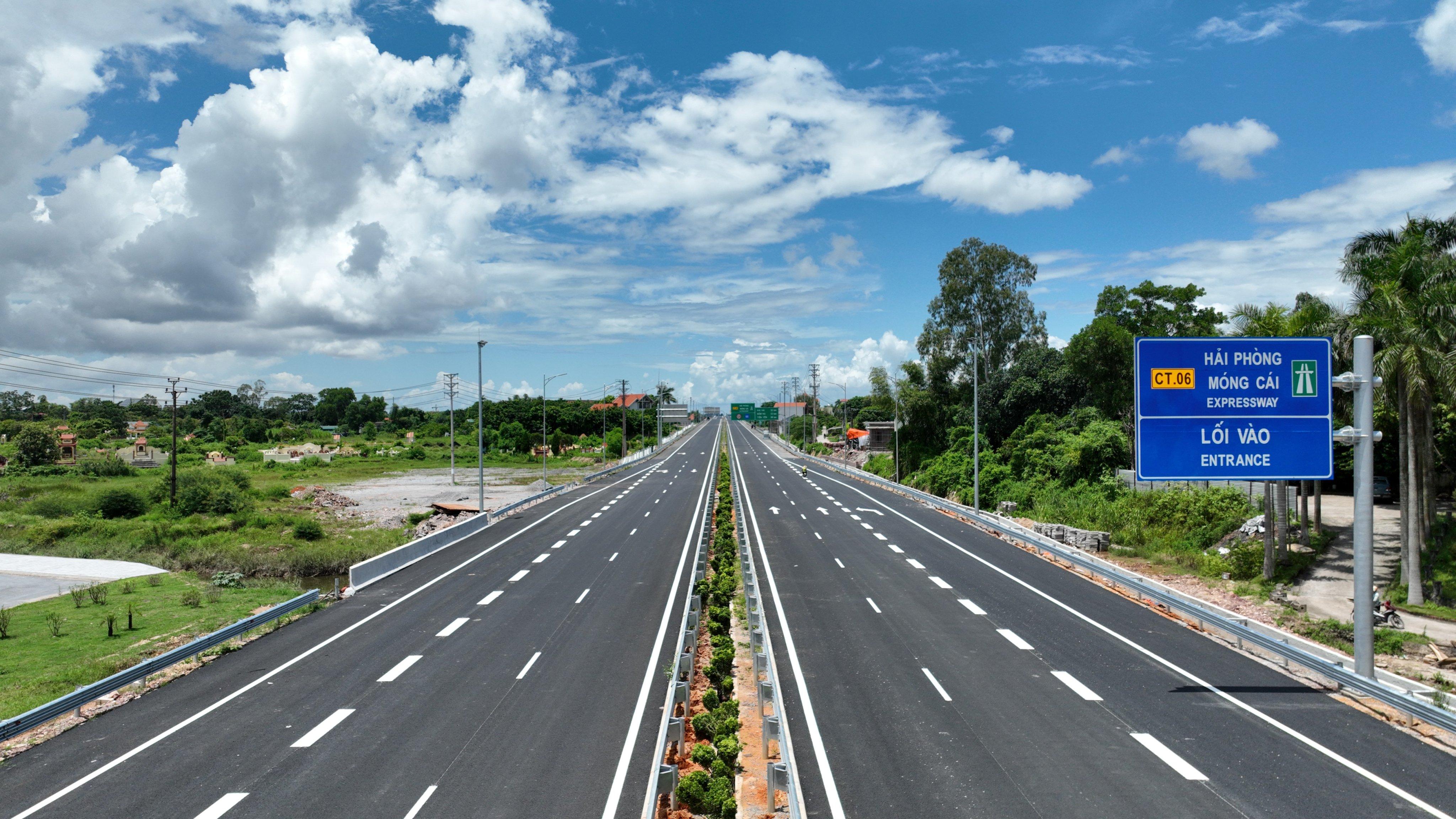
Lawmakers also took up a Government report on fallout from organisational restructuring, stronger decentralisation and delegation of authority, and legal obstacles, plus investment policy for Bao Ha - Tan Phong section of Bao Ha - Lai Chau expressway, Quang Ngai - Kon Tum expressway, and Moc Chau - Son La - Dien Bien expressway, within Son La province.
According to the report, the projects aim to turn Party policy on strategic transport infrastructure into action and meet rising transport demand. Existing national highways linking Son La, Lai Chau and Quang Ngai to regional economic hubs are small, low-standard and prone to landslides in the rainy season, disrupting connectivity and goods flows. Expressways will cut travel time by roughly 50-60 per cent, helping draw investment and unlock local potential.
The projects are also pitched as infrastructure bottleneck relief, completing the planned expressway network, narrowing regional development gaps and reducing poverty in mountainous areas. Son La’s poverty rate is 9.37 per cent, the fifth highest in Vietnam; and Lai Chau’s is 17.24 per cent, the second highest. The routes also carry national defence, security, border protection and emergency response value.
The three routes total about 430.5 km: Moc Chau - Son La - Dien Bien at 179.5 km, Bao Ha - Lai Chau 119 km and Quang Ngai - Kon Tum 132 km. They are planned as four-lane roads with designed speeds of 80-120 km/h. The projects are expected to deploy modern technology and build interchanges, smart transport systems, traffic control centres and rest stops.
The Government wants all three funded with public investment, with a preliminary total of about VND 162.39 trillion (USD 6.24 billion). Preparation is slated for 2026-2027, with compensation, resettlement and construction starting in 2027, and the roads basically completed in 2030 and entering operation from 2031.
To speed up delivery, the Government is seeking special mechanisms similar to those used for NA-approved national key projects. The five policy groups cover authority to adjust investment policy; compensation, support and resettlement; designated bidding; planning adjustments, and construction solid-waste disposal sites.
- (VNA/VLLF)