
Revising credit institution rating regulations to strengthen bank governance

The Vietnamese central bank will soon revise its Circular 52 of 2018 with a view to improving the effectiveness of supervision and raising governance standards of the banking system.

The State Bank of Vietnam (SBV) is currently seeking public comments on a draft circular revising Circular 52 of 2018 on the rating of credit institutions and foreign bank branches. The amendment aims to strengthen supervisory effectiveness, promote sustainable development, and control systemic risks in the banking sector.

More substantive evaluation criteria for credit institution rating

The draft introduces two new indicators under the “Asset Quality” criterion: (i) the specific provision coverage ratio for loans classified from Group 2 to Group 5 (loans with moderate to very high-risk levels), and (ii) the ratio of average other assets to average total assets.

According to the SBV, the first indicator reflects the extent to which a commercial bank has made provisions to cover overdue and non-performing loans and, therefore, will help assess more fully the quality of the bank’s assets. Meanwhile, the second indicator measures the degree of concentration of a bank’s asset portfolio in other (non-core) assets. Together, these indicators provide supervisory bodies with a more comprehensive and risk-sensitive assessment tool.
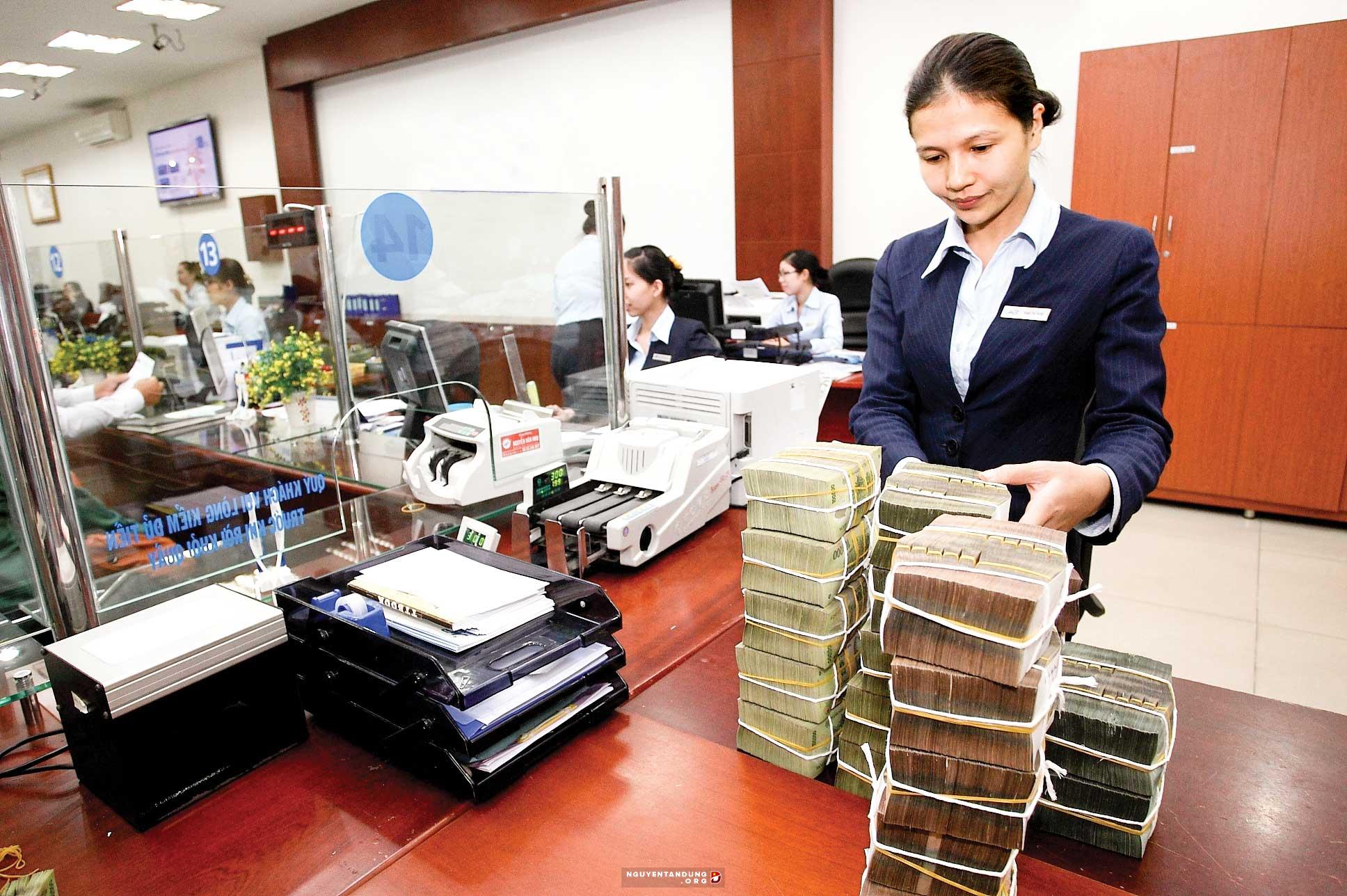
 

Revising credit institution rating regulations

Better alignment with Basel standards

A key update in the draft is the addition of one point to the “Capital Adequacy Ratio” criterion for credit institutions that adopt higher prudential standards according to the Basel Committee’s recommendations ahead of schedule, specifically exceeding the requirements set out in SBV Circular 41 of 2016. This move marks significant progress toward aligning Vietnam’s banking system with international standards and ensuring long-term capital adequacy.

The draft also revises the weighting of evaluation criteria for credit institution rating. The weight of the Management and Governance (M) criterion increases from 10 percent to 15 percent, with its quantitative component rising to 8 percent from 3 percent. Meanwhile, the weight of the Enterprise Performance (E) criterion decreases to 15 percent from 20 percent, with its quantitative indicators reduced to 10 percent from 15 percent.

This adjustment is consistent with the viewpoint set out in the Strategy for Development of Vietnam’s Banking Sector to 2025, with a vision toward 2030 (issued under Decision 986/QD-TTg). Accordingly, credit institutions must aim for sustainable development rather than short-term profit goals, and governance quality at credit institutions must be improved with a greater focus on risk management and the establishment of a risk governance system aligned with the principles and standards of the Basel Committee.

The draft circular goes on to raise the threshold for classifying a commercial bank as large-scale to VND 200 trillion in total assets, from the current level of VND 100 trillion. Explaining the above adjustment, the SBV stated that in recent years, the total assets of the credit institution system have increased significantly. In 2018, when Circular 52 was issued, the total assets reached VND 11.07 quadrillion; by 2024, this figure had risen to VND 22.9 quadrillion—2.1 times higher than in 2018. Therefore, it is necessary to adjust this threshold to better reflect actual conditions.

The draft also amends Article 8.c, replacing the criterion “ratio of outstanding credit extended to large borrowers to total outstanding credit extended to economic organizations and individuals” with “ratio of outstanding credit extended to the 100 largest borrowers to total outstanding credit extended to economic organizations and individuals.” This aims to better reflect credit risk concentration of banks.

In addition, the amendments to Circular 52 also aim to align with the new organizational structure of the State Bank’s system, e.g., replacement of provincial-level State Bank branches with regional branches, and ensure consistency with new regulations such as those on special control and early intervention under the recently adopted Law on Credit Institutions.

By VLLF

1900 6192 để được giải đáp qua tổng đài
090 222 9061 để sử dụng dịch vụ Luật sư tư vấn (CÓ PHÍ)
Đánh giá bài viết:

Tin cùng chuyên mục

Procedures for obtaining approval for listing stocks on foreign securities markets from January 29, 2026

Procedures for obtaining approval for listing stocks on foreign securities markets from January 29, 2026

Procedures for obtaining approval for listing stocks on foreign securities markets from January 29, 2026

To list stocks on foreign securities markets, joint-stock credit institutions must obtain approval from the State Bank of Vietnam. Below are the procedures for obtaining approval for listing stocks on foreign securities markets, in accordance with Circular No. 47/2025/TT-NHNN, which takes effect on January 29, 2026.

Law on Specialized Court provides professional adjudicatory mechanism at International Financial Center

Law on Specialized Court provides professional adjudicatory mechanism at International Financial Center

Law on Specialized Court provides professional adjudicatory mechanism at International Financial Center

The establishment of the International Financial Center necessitates an appropriate judicial institution capable of resolving cross-border investment and business disputes. In this context, the Law on Specialized Court at the International Financial Center was enacted as a key legal foundation for the application of a professional adjudicatory mechanism, thereby enhancing Vietnam’s profile and competitiveness in the international arena.

Disputes Over Bank Credit Contracts

Disputes Over Bank Credit Contracts

Disputes Over Bank Credit Contracts

In recent years, along with the strong growth of the economy and the increasing demand for loans, credit activities in Vietnam have expanded both in scale and scope. However, accompanying this development is the reality that disputes over credit contracts have become increasingly common, not only rising sharply in number but also becoming more complex in nature and extent.

Risks of Ratification in International Investment

Risks of Ratification in International Investment

Risks of Ratification in International Investment

Vietnam is shaping strategic steps to become a destination for global capital flows, most notably with the plan to establish international financial centers in Ho Chi Minh City and Da Nang. As the doors of integration open wider, domestic enterprises will have opportunities to access large-scale investment projects, but at the same time must also face more sophisticated legal risks.

Inheritance Estates of Foreigners Deceased in Vietnam

Inheritance Estates of Foreigners Deceased in Vietnam

Inheritance Estates of Foreigners Deceased in Vietnam

The strong development of international exchanges has made civil relations with foreign elements increasingly common in Vietnam. Among them, inheritance is a particularly complex field, as it not only relates to property rights and personal rights but is also simultaneously governed by multiple legal systems. Therefore, a comprehensive study of the inheritance estate of foreigners in Vietnam is not only of theoretical significance but also of practical value, helping to ensure the legitimate rights and interests of the parties

Loan Security: A Financial Risk Management Tool for Vietnamese Enterprises

Loan Security: A Financial Risk Management Tool for Vietnamese Enterprises

Loan Security: A Financial Risk Management Tool for Vietnamese Enterprises

As Vietnam prepares to establish International Financial Centers in Ho Chi Minh City and Da Nang, domestic enterprises will have greater opportunities to access large capital sources and participate more deeply in the global financial market. However, alongside these opportunities come significant risks, especially in lending and borrowing activities.