 English
 RSS
RSS
I am a foreigner working in Vietnam and usually drive myself to work. What will happen if I commit a traffic violation?
Under Article 2 of Government Decree 168/2024/ND-CP on administrative sanctions against violations in the field of traffic order and safety, foreigners in Vietnam are subject to the same penalties as Vietnamese citizens when breaking traffic rules.
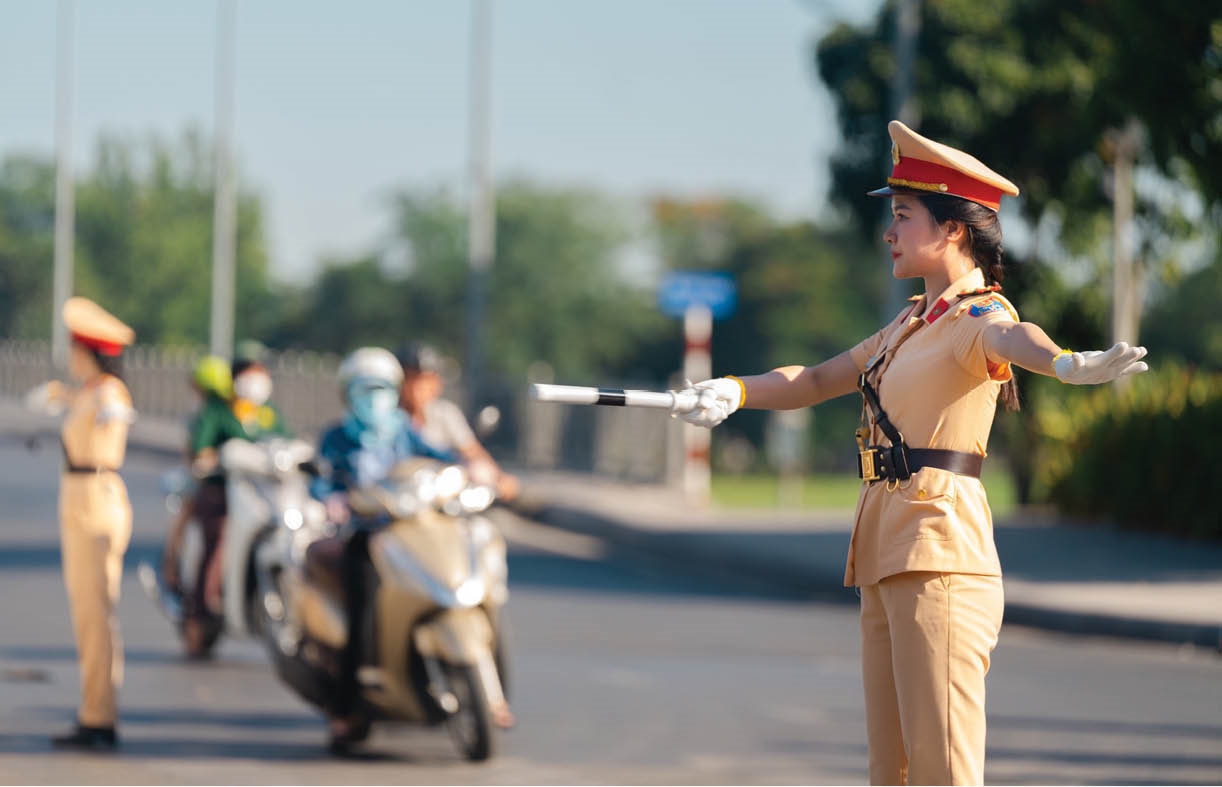
When caught committing a violation, you must:
- Stop at the request of the traffic police.
- Present required documents, including a driver’s license, vehicle registration certificate and vehicle owner’ liability insurance certificate.
The police will examine both the documents and the vehicle’s compliance with traffic requirements.
Please note you may use your national driver’s license together with an International Driving Permit (IDP) if your home country is a signatory to the 1968 Vienna Convention. Under Circular 29/2015/TT-BGTVT of the Ministry of Transport, you must carry both the IDP and your valid national license for the appropriate vehicle class and, of course, comply with Vietnam’s traffic law.
Make sure your license is valid at the time of inspection. If it isn’t in English, you’ll also need a Vietnamese translation. Otherwise, you risk penalties and even temporary seizure of your vehicle.
If you prefer, you can convert your foreign license into a Vietnamese one, or take the required tests to obtain a local license.
There are two ways your traffic violation may be handled:
(i) Without written records: This applies to minor violations, things that only lead to a warning or a fine of up to VND 250,000. In that case, the traffic officer can issue an on-the-spot sanctioning decision.
If you cannot pay the fine immediately, the officer may temporarily take your driver’s license or other documents. You’ll get them back once you pay the fine. Please note that if your violation is detected by camera or other technical means, a written record will still be made.
(ii) With written records: For more serious violations, the officer will prepare an official violation record, either in a printed form or electronically in the violation database.
The officer will read the record aloud, explain your rights and the deadlines for any explanations under Article 61 of the 2012 Law on Handling of Administrative Violations (revised in 2020), and ask you to sign it (or provide a fingerprint if you can’t sign). Witnesses, interpreters, victims, or representatives of affected organizations, if any, must also sign. If the record runs over multiple pages, every page has to be signed.
If you’re absent from the scene or refuse to sign the record, the head of the traffic police unit will invite a representative of the commune-level administration or at least one witness to sign the record. If that’s not possible, the officer must state the reason clearly in the record. This procedure will also be applied in case the violator is unidentifiable.
As a foreigner, you can pay the fine in one of three ways:
- Cash, directly at the State Treasury office or a designated bank;
- Bank transfer to the State Treasury account listed in the sanction decision; or,
- Online payment through banks or licensed payment intermediaries.
What penalties will I face if I’m caught drunk driving?
Under Decree 168/2024/ND-CP, foreigners who operate vehicles after consuming alcohol, beer or stimulants are subject to the same penalties as Vietnamese citizens. Sanctions vary depending on the vehicle type and blood alcohol concentration (BAC).
For automobile drivers:
- BAC ≤ 50 mg/100 ml of blood or 0.25 mg/liter of breath: fine from VND 6–8 million.
- BAC of between over 50mg and 80mg/100 ml of blood, or over 0.25 mg and 0.4 mg/liter of breath: fine from VND 18–20 million plus deduction of 10 driver’s license points.
- BAC > 80 mg/100 ml of blood or 0.4 mg/liter of breath: fine from VND 30–40 million and driver’s license suspension for 22–24 months.
For motorcycle riders:
- BAC ≤ 50 mg/100 ml of blood or 0.25 mg/liter of breath: fine from VND 2–3 million plus deduction of 4 license points.
- BAC of between over 50 mg and 80 mg/100 ml of blood, or over 0.25 mg and 0.4 mg/liter of breath: fine from VND 6–8 million plus deduction of 10 license points.
- BAC > 80 mg/100 ml of blood or 0.4 mg/liter of breath: fine from VND 8–10 million and license suspension for 22–24 months.
For bicycle and and electric bicycle riders:
- BAC ≤ 50 mg/100 ml of blood or 0.25 mg/liter of breath: fine from VND 100,000–200,000.
- BAC of between over 50 mg and 80 mg/100 ml of blood, or over 0.25 mg and 0.4 mg/liter of breath: fine from VND 300,000–400,000.
- BAC > 80 mg/100 ml of blood or 0.4 mg/liter of breath: fine from VND 400,000–600,000.
Please note that if you drive with a national license plus an IDP, the point-deduction system does not apply, since it is not regulated for these licenses. If you hold a Vietnamese driver’s license, the point-deduction system will apply as listed above.
Moreover, under Article 48 of Decree 168, traffic police may temporarily seize vehicles to immediately stop the violation. The standard seizure period must not exceed seven working days. In special cases, this period can be extended:
- Up to 10 working days if the case must be transferred to a competent sanctioning person;
- Up to one month if explanations from the violator or verification of circumstances are required; or,
- Up to two months if the case is particularly serious, with complex details needing further investigation and evidence collection.
By VLLF