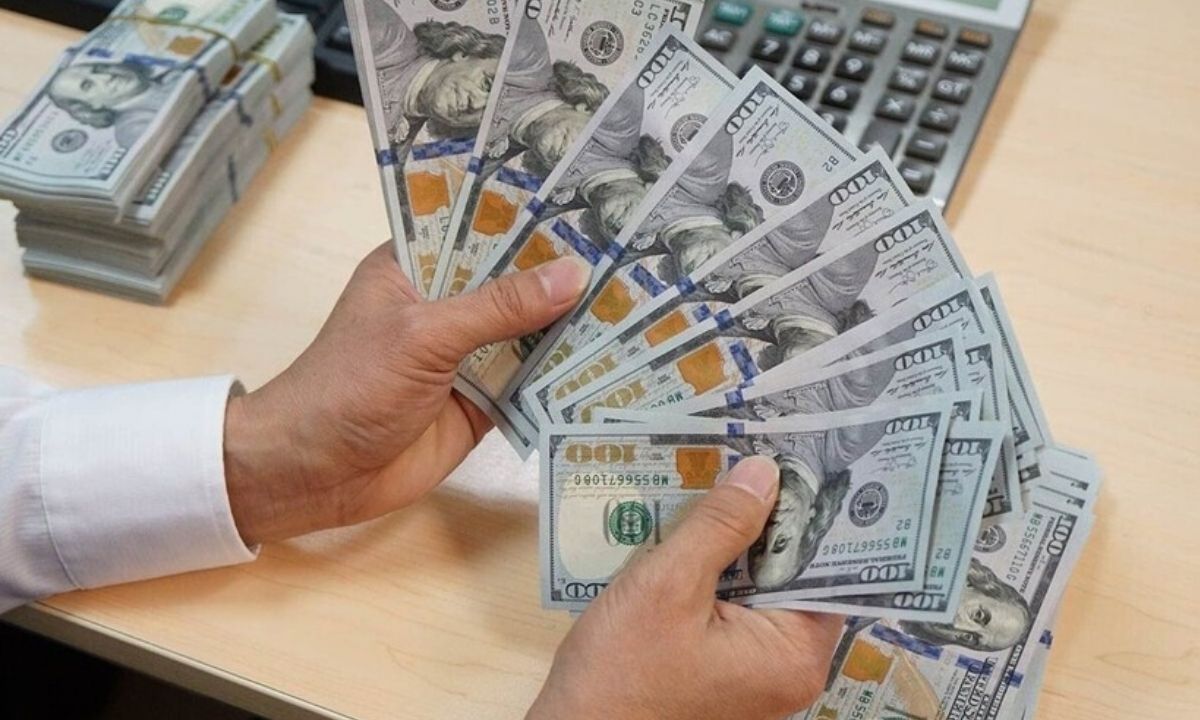
Illegal foreign currency transactions constitute a violation of law and may be subject to administrative penalties depending on the nature and severity of the violation.
1. Penalties for illegal foreign currency transactions
Under Article 27 of Decree No. 340/2025/ND-CP, penalties for violations of foreign exchange operations are as follows:
No.
Violation
Penalty
1
- Selling/buying foreign currency between individuals, if the value of foreign currency sold or bought is less than USD 1,000 (or equivalent value in another foreign currency);- Selling/buying foreign currency at an unlicensed currency exchange organization, if the value of foreign currency sold or bought is less than USD 1,000 (or equivalent value in another foreign currency).
A warning
Selling/buying foreign currency between individuals, if the value of foreign currency sold or bought is from USD 1,000 to under USD 10,000 (or equivalent value in another foreign currency); selling/buying foreign currency between individuals, if the value of foreign currency sold or bought is less than USD 1,000 (or equivalent value in another foreign currency) in case of recidivism or repeated violation;- Selling/buying foreign currency at an unlicensed currency exchange organization, if the value of foreign currency sold or bought is from USD 1,000 to under USD 10,000 (or equivalent value in another foreign currency); selling/buying foreign currency at an unlicensed currency exchange organization, if the value of foreign currency sold or bought is less than USD 1,000 (or equivalent value in another foreign currency) in case of recidivism or repeated violation.
A fine ranging from VND 10,000,000 to VND 20,000,000
- Selling/buying foreign currency between individuals, if the value of foreign currency sold or bought is from USD 10,000 to under USD 100,000 (or equivalent value in another foreign currency);- Selling/buying foreign currency at an unlicensed currency exchange organization, if the value of foreign currency sold or bought is from USD 10,000 to under USD 100,000 (or equivalent value in another foreign currency);- Selling/buying foreign currency at rates other than those announced by SBV, except for the following cases:+ Making the actual buying, selling or exchange rate exceed the prescribed exchange rate margin by means of setting exchange rates, commissions or brokerage fees in cash or in kinds and other promotions for buying/selling foreign currency in any forms;+ Concurrently acting as a foreign currency paying agent for two or more economic organizations in contravention of regulations of law.
A fine ranging from VND 20,000,000 to VND 30,000,000
- Selling/buying foreign currency between individuals, if the value of foreign currency sold or bought is USD 100,000 or more (or equivalent value in another foreign currency);- Selling/buying foreign currency at an unlicensed currency exchange organization, if the value of foreign currency sold or bought is USD 100,000 or more (or equivalent value in another foreign currency).
A fine ranging from VND 80,000,000 to VND 100,000,000 and confiscation of the foreign currency involved
In addition, under Clause 3, Article 5 of Decree No. 340/2025/ND-CP, the above fines apply to individuals. The fine imposed on an organization is twice as much as the one imposed on an individual for committing the same administrative violation.
Furthermore, for people's credit funds, microfinance institutions and their affiliates:
The fine imposed for an administrative violation committed by a person working at a people’s credit fund or microfinance institution or their affiliate shall be 10% of the corresponding fine prescribed in Chapter II hereof.
The fine imposed on the people’s credit fund or the microfinance institution or their affiliate shall be twice as much as the fine imposed on the person working there.
2. Who is allowed to use foreign currency cash?
In accordance with provisions specified in Article 3, Decree No. 70/2014/ND-CP, use of foreign currency cash by individuals is specified as follows: - Individual residents and nonresidents who have foreign currencies in cash may store, carry along, donate, present, bequeath or sell them to licensed credit institutions, transfer or carry abroad such foreign currencies in accordance with this Decree, and pay to subjects licensed to collect foreign currencies in cash. - Residents being Vietnamese citizens may use foreign currencies in cash for depositing as savings at licensed credit institutions, and withdraw principals and interests in the deposited foreign currency.
3. Is it permitted to bring foreign currency into Vietnam?
- Individual residents and non-residents on entry who carry foreign currency cash, Vietnam dong cash and gold in excess of the limits set by the State Bank of Vietnam shall declare them to border-gate customs offices.
- Individual residents and non-residents on exit who carry foreign currency cash, Vietnam dong cash and gold in excess of the limits set by the State Bank of Vietnam shall declare them to border-gate customs offices and produce relevant papers as prescribed by the State Bank of Vietnam.
- Residents that are licensed credit institutions may import or export foreign currency cash after obtaining ritten approval of the State Bank of Vietnam. The State Bank of Vietnam shall prescribe dossiers, order and procedures for approving the import or export of foreign currency cash by licensed credit institutions.
The State Bank of Vietnam shall prescribe dossiers, order and procedures for granting approval for the export and import of foreign currency cash by licensed credit institutions.
At the same time, in accordance with Clause 1, Article 2, Circular No. 15/2011/TT-NNNN prescribes foreign-currency and Vietnam-dong cash amounts to be declared to border-gate customs offices upon entry or exit as follows:
- Upon entry or exit via Vietnam’s international border gates with passports, persons who carry foreign-currency or Vietnam-dong cash in excess of the following amount shall be required to declare to border-gate customs offices:
+ USD 5,000 (five thousand US dollars) or cash amounts in other foreign currencies of equivalent value;
+ VND 15,000,000 (fifteen million Vietnam dong).
Accordingly, individuals entering Vietnam may carry foreign currency within the prescribed limits. If the amount of foreign currency exceeds the prescribed limits, it must be declared to customs authorities at the border gate.
The above is information on penalties for illegal foreign currency transactions.
Individuals engaged in affiliate marketing who earn income from commissions, advertising and other sources must fulfill their tax liabilities in accordance with regulations. How much tax must these individuals pay?
Vietnamese workers working for foreign organizations and individuals in Vietnam need to know which agencies or organizations they may request support from when their rights and interests are affected, as well as what they must do after entering into a labor contract.
Decree No. 371/2026/ND-CP detailing the recruitment and management of Vietnamese workers working for foreign organizations and individuals in Vietnam, effective from November 15, 2026, introduces several changes concerning the reporting responsibilities of the parties involved in recruitment.
The resolution on national security strategy provides a broader approach to protecting national security for a period in which technological advance, economic interdependence and non-traditional security risks are increasingly interconnected.
How does Circular No. 118/2026/TT-BTC regulate the application of International Accounting Standards in Vietnam? Which enterprises may choose to apply these Standards, and what principles must they follow?
The Urban Development Law is expected to unlock resources and enable Vietnamese cities to develop on the basis of productivity, technology and regional connectivity and become new growth poles of the economy.
A number of new Decrees officially take effect from October 1, 2026, directly affecting various areas. Below is a list of Decrees taking effect in October 2026.
A roundup of key new policies and regulations taking effect in October 2026, covering banking, social policies, taxation, investment, and other areas of interest to individuals and businesses.
The 2026 amended Law on Vietnamese Guest Workers has amended and supplemented various regulations on worker source preparation, training fees, recruitment, contracts, licenses, and responsibilities of enterprises providing the service of sending Vietnamese workers abroad as guest workers.
Circular No. 48/2026/TT-BCT introduces a number of new regulations on procedures for importing goods under tariff quotas, covering dossiers, procedures, and the confirmation of tariff quotas for traders.

 English
 RSS
RSS