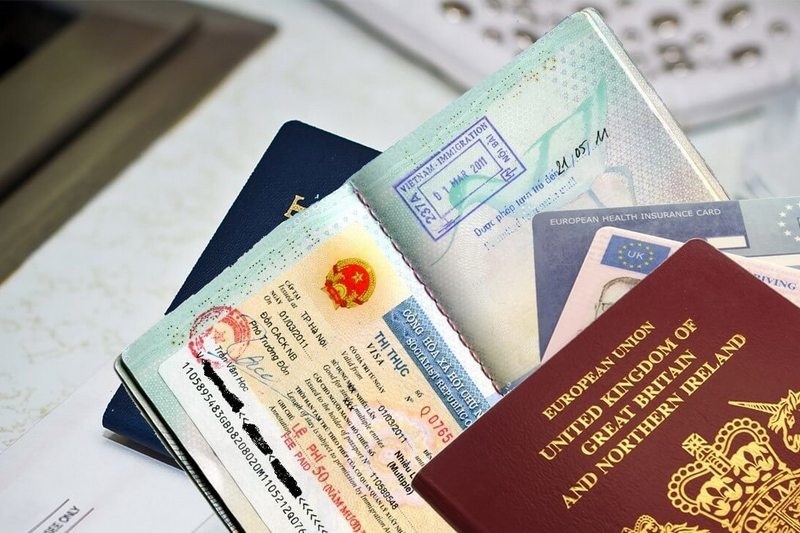
Vietnam's rapidly growing economy continues to attract business professionals and foreign investors. Understanding the requirements and procedures for applying for a business visa is crucial for anyone planning to conduct business activities in Vietnam. This comprehensive guide provides you with all the necessary information for applying for a Vietnamese business visa in 2025.
1. Understanding the Vietnamese Business Visa
The business visa (code DN) allows foreign citizens to enter Vietnam to engage in business activities, including:
Attending meetings
Exploring investment opportunities
Establishing a commercial presence in Vietnam
Types of Business Visas
According to Point d and Paragraph 3 of Article 1 of the Amended Law on Entry, Exit, Transit, and Residence of Foreigners in Vietnam (effective from 01/07/2020):
Visa DN1: Issued to foreigners working for a business or organization with legal personality as defined by Vietnamese law.
Visa DN2: Issued to foreigners entering Vietnam to offer services, establish a commercial presence, or engage in other activities under international agreements to which Vietnam is a party.
Business Visa Duration
The visa is valid for up to 12 months
(According to Point b, Paragraph 4 of Article 1 of the Amended Law on Entry, Exit, and Residence of Foreigners in Vietnam)
Law on the Exit and Entry of Vietnamese Citizens and the Amended Law on Entry, Exit, Transit, and Residence of Foreigners in Vietnam (No. 23/2023/QH15)
Visa application form for issuance or extension of temporary residence (Form NA5)
One recent photograph, size 4 x 6 cm
Passport or valid international travel document of the foreigner.
Certified copy of the business license or decision issued by the competent authority regarding the establishment of the organization.
Letter of introduction with the official seal and signature of the authorized person of the organization.
Legal basis: According to Item 5, Section B, Part II of the administrative procedures amended and supplemented in the field of entry-exit management under the jurisdiction of the Ministry of Public Security, issued along with Decision 6968/QĐ-BCA in 2022.
3. Application Process
Steps for Implementation
Step 1: Prepare the required documents in accordance with the law.
Step 2: Submit the documents:
Direct Submission: Applicants, including Vietnamese citizens, organizations, individuals, and legally residing foreigners in Vietnam, can submit their documents in person during office hours at the Provincial Immigration Management Office of the Public Security or submit via the National Public Service Portal or the Ministry of Public Security Portal. If required, supplementary documents can be sent via public postal services as notified by the Immigration Management Agency on the respective portals.
Document Review:
If the documents are complete and valid, the receiving officer will issue an appointment slip for result collection and request the payment of fees (which may be processed online through the portal, with an electronic receipt provided).
If the documents are incomplete or invalid, the officer will guide the applicant or notify them via the portal to complete the application.
In cases where the documents do not meet the requirements, the application will be rejected with a written notice or notification on the portal stating the reasons.
For documents submitted via the National Public Service Portal or the Ministry of Public Security Portal that fall under the jurisdiction of the Immigration Department, the information will be forwarded to the Immigration Department and the applicant will be notified.
In the case of online submission, the applicant may choose to receive the result via postal service and must pay the corresponding delivery fee.
Step 3: Collect the Result:
Applicants can collect the result directly at the Provincial Immigration Management Office of the Public Security. When collecting the result, the applicant must bring the appointment slip and payment receipt for verification.
If receiving results via postal service, follow the instructions provided by the postal service.
If the visa is not granted, a written notice or notification on the portal will explain the reasons for rejection.
Online: Submit the documents via the National Public Service Portal or the Ministry of Public Security Portal.
Postal Service: Submit supplementary documents via public postal services as instructed by the Immigration Management Office (if applicable).
Processing Time: Not exceeding 5 working days from the receipt of a complete application.
4. Requirements for the Sponsoring Business
A business sponsoring a foreigner's application for a business visa must meet the following conditions:
Must be legally registered for business in Vietnam.
Have the authority to sponsor the foreigner.
Provide all necessary documents as required by the Immigration Management Agency.
Legal basis: Decree No. 152/2020/ND-CP, which regulates the conditions for businesses sponsoring foreign workers.
5. Visa Extension
Procedure for Business Visa (DN1, DN2) Extension
Step 1: Prepare the application documents, which include:
Visa application form (Form NA5)
Original passport of the foreigner that is valid according to regulations.
Residence confirmation certificate from the local police where the foreigner is residing in Vietnam or an online temporary residence declaration.
Certified copy of the legal documents of the sponsoring company, including Business registration certificate / Investment certificate / Branch operation permit / Representative office certificate.
Step 2: Submit the application for a visa/extension:
The sponsoring entity may submit the documents at the Immigration Department of the Ministry of Public Security or the designated Immigration Management Office.
Step 3:Collect the Result:
Within 5 working days from the receipt of a complete application, the Immigration Management Agency will review and issue the visa if all conditions are met.
6. Special Provisions for 2025
Key anticipated changes in 2025 include:
Implementation of an electronic authentication system for sponsoring businesses.
Stricter security checks for visa applicants.
Updated requirements for health and safety.
7. Tips & Important Notes
Common Mistakes to Avoid
Incomplete Documents: Can lead to delays or visa rejection.
Late Submission: Insufficient processing time before your trip.
Using Unofficial Visa Services: May result in fraud or receiving a counterfeit visa.
Misunderstanding Visa Conditions: Note that a business visa does not permit paid employment if the appropriate work permit has not been obtained.
Frequently Asked Questions
How long does it take to process a business visa?
Typically, it takes 3-5 working days
Can I convert a tourist visa into a business visa?
No. You must exit Vietnam and apply for a business visa from abroad.
What activities are permitted under a business visa?
Attending meetings, negotiating contracts, and conducting market research.
Note: Engaging in paid employment is not permitted if you do not have a work permit.
8. Conclusion
Applying for a business visa in Vietnam requires careful preparation and strict adherence to immigration regulations. By following this guide and ensuring that all documents are complete, you can smoothly complete the visa application process and carry out your business activities in Vietnam with ease.
Important Note: Visa regulations may change over time. Always check the latest information with the competent authorities or consult with reputable law firms such as Harley Miller Law Firm before submitting your application.
Vietnamese workers working for foreign organizations and individuals in Vietnam need to know which agencies or organizations they may request support from when their rights and interests are affected, as well as what they must do after entering into a labor contract.
Decree No. 371/2026/ND-CP detailing the recruitment and management of Vietnamese workers working for foreign organizations and individuals in Vietnam, effective from November 15, 2026, introduces several changes concerning the reporting responsibilities of the parties involved in recruitment.
The resolution on national security strategy provides a broader approach to protecting national security for a period in which technological advance, economic interdependence and non-traditional security risks are increasingly interconnected.
How does Circular No. 118/2026/TT-BTC regulate the application of International Accounting Standards in Vietnam? Which enterprises may choose to apply these Standards, and what principles must they follow?
The Urban Development Law is expected to unlock resources and enable Vietnamese cities to develop on the basis of productivity, technology and regional connectivity and become new growth poles of the economy.
A number of new Decrees officially take effect from October 1, 2026, directly affecting various areas. Below is a list of Decrees taking effect in October 2026.
A roundup of key new policies and regulations taking effect in October 2026, covering banking, social policies, taxation, investment, and other areas of interest to individuals and businesses.
The 2026 amended Law on Vietnamese Guest Workers has amended and supplemented various regulations on worker source preparation, training fees, recruitment, contracts, licenses, and responsibilities of enterprises providing the service of sending Vietnamese workers abroad as guest workers.
Circular No. 48/2026/TT-BCT introduces a number of new regulations on procedures for importing goods under tariff quotas, covering dossiers, procedures, and the confirmation of tariff quotas for traders.
Bearing the expectation of modernising the national education system, three major laws concerning education are likely to remove long-standing bottlenecks and lay a sustainable policy foundation for the country’s long-term development.

 English
 RSS
RSS